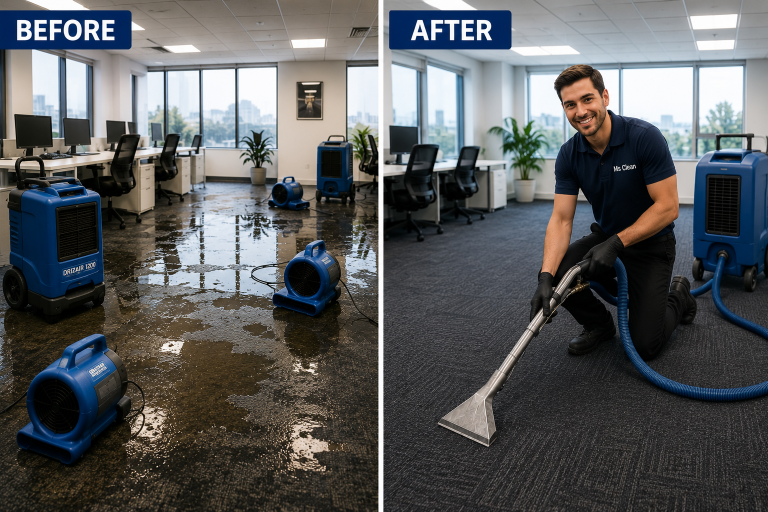
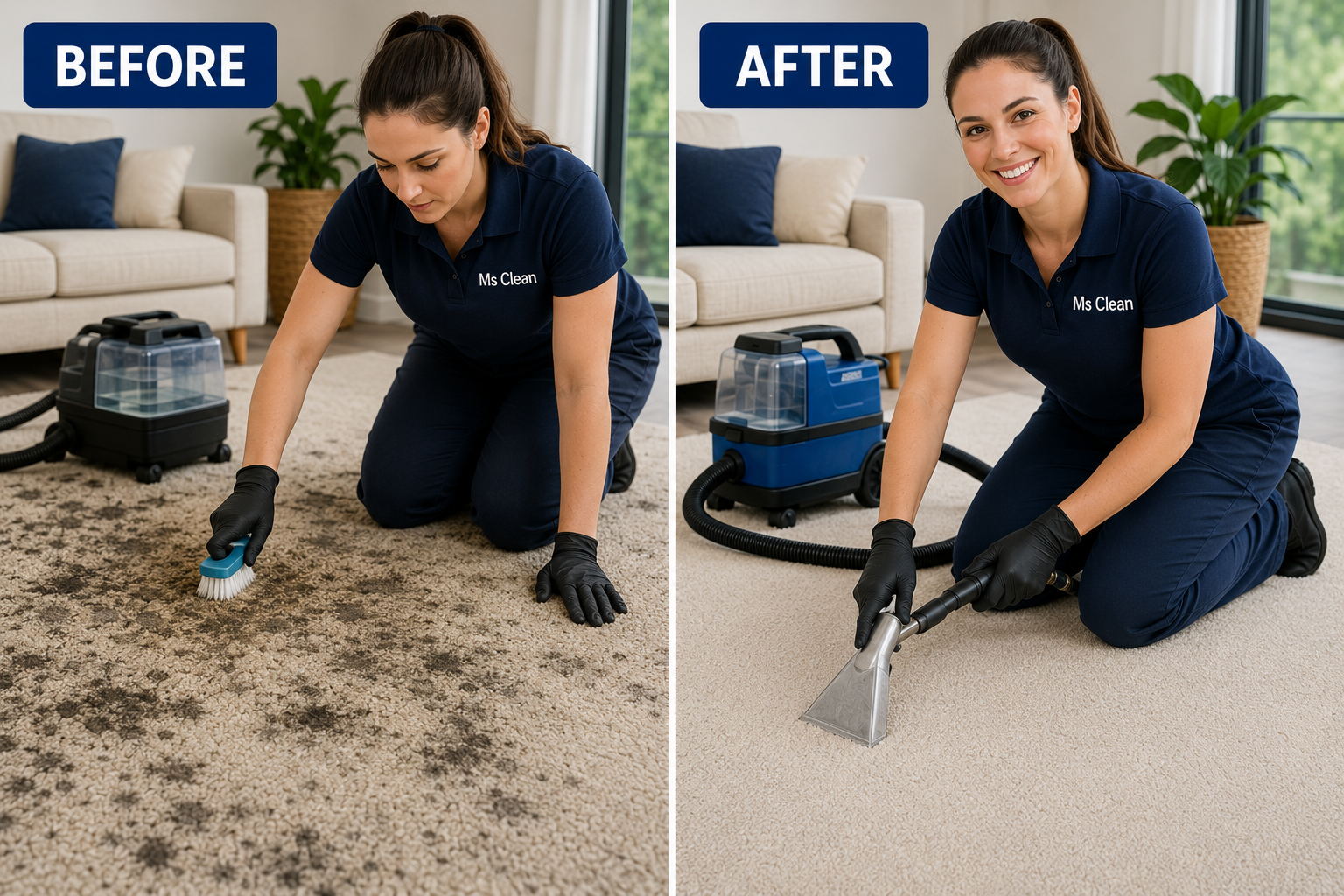
Have you found dark spots on your carpet? Noticed a musty smell that won’t go away?
That’s mould and it needs to go fast.
Mould in carpet is a high healthy risk. It releases spores that trigger asthma, allergies, and respiratory problems to your health. Kids and elderly people are especially vulnerable.
The good news is if you catch it early, you can remove mould from carpet at home and officesvery simply way. But some cases need a professional. Treating it the wrong way can spread spores through your whole home and office.
This guide covers everything. You’ll learn how to spot mould, remove it safely, when to call an Adelaide professional and exactly what it costs in 2026.
| Key Fact: According to the Australian Government’s Department of Health, mould exposure can cause nasal congestion, throat irritation, coughing, and skin irritation. People with asthma or mould allergies face more serious symptoms. Don’t leave it untreated. |
Why Mould Grows in Adelaide Carpets
Adelaide has a wet winter season from June to August. That moisture, combined with poor airflow in older homes and office creates the perfect conditions for mould.
Here are the main reasons Adelaide carpets get mould:
- Winter condensation. Cold walls and floors cause moisture to build up under the carpet and in the backing. Mould can grow for weeks before you see or smell it.
- Flooding and leaks. Adelaide’s storm season brings roof leaks, burst pipes, and subfloor flooding — especially in older northern suburbs homes and office. Any carpet that stays wet for more than 24 hours is at risk.
- Poor ventilation. Closed rooms with little airflow common in newer insulated homes and offices, trap humidity. Mould thrives in still, damp air.
- Pet accidents left untreated. Urine soaks into the backing. If not properly dried and treated with an enzyme cleaner, it creates a moist environment that feeds mould growth.
- Evaporative coolers. These are extremely common in Adelaide’s northern suburbs. They add moisture to the air. In poorly ventilated rooms, the moisture settles into carpet fibres over summer.
- Concrete subfloors. Many Adelaide offices, especially ex-Housing Trust properties in Elizabeth and Salisbury, have concrete subfloors. Concrete holds moisture. It passes slowly up through the underlay and into the carpet backing.
Any one of these can cause mould. In older homes,offices several often combine at once.

How to Tell If Your Carpet Has Mould
Mould isn’t always easy to see, especially in the early stages. Know what to look for.
Visual Signs
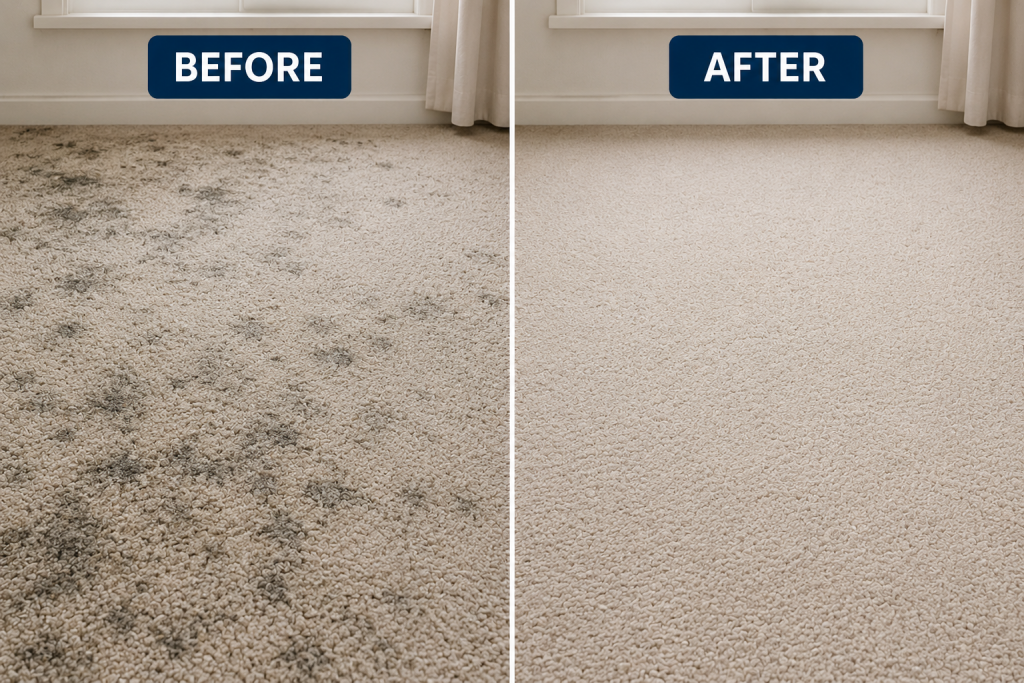
- Dark green, black, or white spots on the carpet surface or backing.
- Discolouration in a circular or spreading pattern, often starting from a corner or wall edge.
- A fuzzy or powdery texture on carpet fibres when you look closely.
- Staining that doesn’t match any obvious spill or dirty shoe traffic.
Smell Signs
- A strong musty or earthy odour is especially noticeable when the room is closed up overnight.
- Smell that gets worse after rain or in humid weather.
- An odour that comes back even after the carpet surface has been cleaned.
Health Signs
- Household members sneezing, coughing, or having itchy eyes, especially in one room.
- Asthma symptoms flare up indoors with no obvious trigger.
- Skin irritation or throat discomfort that improves when you leave the house.
| Check the Backing Too: Mould often starts underneath the carpet, not on top. If you suspect mould, lift a corner of the carpet near a wall. Check the backing and the underlay. Black or green spots on the underlay mean the mould is already established and likely needs professional treatment. |
Can You Remove Mould from Carpet Yourself?
It depends on how bad it is. Here’s a simple rule:
| Mould Situation | DIY Safe? | What to Do |
| Small surface spot (under 30cm) | Yes | DIY removal — follow the steps in this guide |
| Smell but no visible mould | Possibly | Check the backing first — may need a pro |
| Spot larger than 30cm | No | Call a professional Adelaide carpet cleaner |
| Mould in the underlay or backing | No | Professional removal and underlay replacement |
| After flooding or water damage | No | Professional drying and mould remediation |
| Anyone in home with asthma or allergies | No | Don’t disturb the mould — call a pro first |
| Mould keeps returning after DIY | No | Underlying moisture issue — needs expert diagnosis |
What You Need Before You Start
Gather everything before you begin. Once you disturb mould spores, you don’t want to stop mid-job.
Safety Gear (Non-Negotiable)
- N95 or P2 respirator mask standard dust masks don’t filter mould spores.
- Rubber or nitrile gloves.
- Safety goggles mould spores in the eyes cause serious irritation.
- Old clothes or disposable coveralls should be washed immediately after, or thrown away.
Cleaning Supplies
- White vinegar (undiluted) kills 82% of mould species. Available at any Adelaide supermarket.
- Baking soda (bicarb soda) absorbs moisture and odour after treatment.
- A stiff-bristled brush for working the solution into fibres.
- Clean white cloths or paper towels for blotting. White shows you if the mould is still transferring.
- A HEPA vacuum standard vacuum blows spores back into the air. A HEPA filter traps them.
- Plastic bags to seal and bin contaminated cloths and paper towels immediately.
- A fan and/or dehumidifier, fast drying after treatment, is critical.
| 🛒 Where to Buy in AdelaideN95 masks and HEPA vacuums are available at Bunnings, Total Tools, and Mitre 10 locations across the northern suburbs. White vinegar in bulk (4L) is available at Costco Kilburn or Adelaide Wholesale Grocers. |
How to Remove Mould from Carpet: Step-by-Step
Follow these steps in order. Don’t skip the drying steps — mould returns fast if any moisture is left behind.
Step 1: Ventilate the Room
- Open all windows and doors in the room.
- If possible, set up a fan to blow air out of the room not in. This stops spores spreading through the house.
- Keep children, elderly people, and anyone with asthma or allergies out of the room until the job is done and the carpet is fully dry.
Step 2: Dry Vacuum the Mouldy Area
- Use your HEPA vacuum over the mouldy area first. This removes loose surface spores before you apply any liquid.
- Vacuum in multiple directions with the pile, against the pile, and sideways.
- Immediately seal the vacuum bag or empty the canister into a sealed plastic bag. Put it in the outside bin.
- Wipe down the vacuum head with a damp cloth before putting it away.
Step 3: Apply White Vinegar
- Pour undiluted white vinegar into a spray bottle.
- Spray generously over the mouldy area. Don’t be shy, the vinegar needs to penetrate the fibres.
- Leave it for at least 1 hour. Vinegar needs contact time to kill the mould.
- Do not rinse yet.
| Why Vinegar: White vinegar is a mild acid (acetic acid) that kills most mould species on contact. It’s non-toxic, safe for most carpet fibres, and available anywhere. Studies show it’s more effective than bleach for porous surfaces like carpet — bleach only kills surface mould, while vinegar penetrates the fibre. |
Step 4: Scrub the Area
- After 1 hour, use a stiff brush to work the vinegar into the fibres with firm circular strokes.
- You’ll see the mould start to lift. Blot the loosened mould with a clean white cloth.
- Seal used cloths immediately in a plastic bag. Don’t leave them sitting open spores will spread.
- Repeat scrubbing and blotting until no mould transfers to the cloth.
Step 5: Apply Baking Soda
- Sprinkle a generous layer of baking soda (bicarb soda) over the treated area.
- Leaving it for a minimum of 2 hours overnight is better. Baking soda draws out remaining moisture and kills residual mould.
- Vacuum up the baking soda with your HEPA vacuum.
Step 6: Dry the Carpet Completely
- This is the most important step. Mould comes back if any moisture remains.
- Point a pedestal fan directly at the area. Run it for at least 4 to 6 hours.
- If you have a dehumidifier, run it in the room at the same time. In Adelaide’s humid winters, this is especially important.
- Do not put furniture back or walk on the carpet until it is completely dry to the touch and dry underneath too. Lift a corner to check.
- In winter, this may take up to 24 hours. Be patient. Putting furniture back too early is the number one reason mould returns.
Step 7: Check and Prevent
- Once dry, inspect the area under good light. Any remaining dark spots need a second treatment.
- Check the backing and underlay. If you find mould on either, stop DIY and call a professional.
- Identify and fix the moisture source. If you don’t fix what caused the mould, it will return within weeks.
What Not to Do When Removing Carpet Mould
These are the most common mistakes. Each one can make the problem worse.
| Mistake | Why It’s a Problem | What to Do Instead |
| Using bleach on carpet | Bleach kills surface mould only. It leaves moisture behind, feeding regrowth. It also damages carpet dyes. | Use white vinegar — it penetrates the fibre and kills mould at the root. |
| Vacuuming without a HEPA filter | Standard vacuums blow spores back into the air and spread them room to room. | Use a HEPA-rated vacuum only. Seal and bin the contents after. |
| Rubbing the mould | Rubbing spreads spores across a wider area and pushes mould deeper into the pile. | Always blot from the outside edge inward. |
| Not drying fully | Even small amounts of remaining moisture restart the mould cycle within days. | Use a fan and dehumidifier until the carpet is bone dry check the underside too. |
| Steam cleaning over mould | Steam adds more moisture and can spread spores. Only use steam after full mould removal and drying. | Remove and dry first. Steam clean as a final sanitising step only. |
| Ignoring the source | Removing surface mould without fixing the leak, condensation, or ventilation issue means it returns fast. | Find and fix the moisture source before or immediately after treatment. |
When to Call a Professional Adelaide Carpet Cleaner
Some mould situations are beyond DIY. Call a professional if any of these apply:
- The mould patch is larger than 30cm in any direction.
- The mould has reached the underlay or carpet backing.
- The carpet has been wet for more than 24 to 48 hours (flooding, burst pipe, roof leak).
- The mould came back within 2 weeks of DIY treatment.
- Anyone in your home and office has asthma, a respiratory condition, or a mould allergy.
- You can smell mould but can’t locate the source.
- The mould appears to be black mould (Stachybotrys) — a darker, slimy-textured growth. This species is especially harmful and must be handled by a professional.
- You’re managing a rental property and need certified remediation documentation for a tenant or landlord dispute.
| 🔬 Black Mould WarningBlack mould (Stachybotrys chartarum) is a serious health hazard. It produces mycotoxins that can cause chronic fatigue, headaches, and respiratory damage. It looks darker and slimier than common grey or green mould. If you suspect black mould, leave the room, seal it off, and call a professional immediately. Do not attempt DIY removal. |
Professional Mould Removal Cost in Adelaide (2026)
Here’s what Adelaide carpet cleaning and mould remediation services charge in 2026:
| Service | Price (AUD) | What’s Included | Suburbs Served |
| Mould assessment (in-home) | Free – $80 | Visual inspection, moisture reading, report | All Adelaide metro |
| Mould treatment (per room) | $120 – $250 | Antifungal treatment + extraction + dry | All suburbs |
| Underlay replacement (per m²) | $15 – $35 / m² | Remove old underlay, treat subfloor, relay new | All suburbs |
| Flood damage carpet dry-out | $300 – $800+ | Industrial drying equipment, moisture monitoring | Northern suburbs priority |
| Full mould remediation (home) | $800 – $3,000+ | Multi-room treatment, air quality testing, report | All Adelaide metro |
| End-of-lease mould clean | $180 – $400 | Certified clean + documentation for bond | All Adelaide suburbs |
| Same-day emergency response | +$50 – $100 surcharge | 2–4 hour arrival for flooding events | Northern suburbs first |
For a single room with moderate mould, expect to pay $120–$250. Severe cases involving the subfloor, multiple rooms, or water damage will cost significantly more.
Always get a written quote before work begins. Reputable Adelaide cleaners will inspect the area and give you a fixed price — not an hourly estimate.
Real Adelaide Jobs: Before and After
Case Study 1 — Winter Mould, Salisbury East
Customer: Karen B. | Property: 1970s brick home with concrete subfloor | Problem: Musty smell in master bedroom for 3 months. Dark patches visible near the wall.
Karen had tried a supermarket mould spray. The smell faded for a week, then returned stronger.
Our inspection found mould in the carpet backing and in the underlay — both had been affected by condensation rising through the concrete slab all winter.
We removed and disposed of the underlay. Treated the concrete subfloor with an antifungal solution. Installed new underlay and professionally cleaned and dried the carpet in place.
Result: Mould and odour fully eliminated. We also advised installing a subfloor ventilation fan — a common fix for older Salisbury homes. Total cost: $480.
Case Study 2 — Flood Damage, Elizabeth Park
Customer: Property manager referral | Property: 3-bedroom rental | Problem: Hot water system leak went unnoticed for 4 days. Two carpeted rooms affected.
By the time we arrived, mould was visible in both rooms. The underlay in the main bedroom was saturated.
We used industrial air movers and a commercial dehumidifier over 48 hours. Replaced both sections of underlay. Applied antifungal treatment to the carpet and subfloor. Provided a mould remediation certificate for the insurance claim.
Result: Both rooms returned to full use. Carpet saved — no replacement needed. Insurance claim approved with our documentation. Total cost: $1,100.
Case Study 3 — Evaporative Cooler Mould, Parafield Gardens
Customer: Tom & Angela R. | Problem: Mould under the lounge room carpet — directly below the evaporative cooler outlet. First noticed in autumn.
The cooler had been running all summer, adding humidity to a poorly ventilated room. The carpet and underlay had been slowly absorbing moisture for months.
We treated the carpet with antifungal solution, replaced the underlay, and professionally dried the subfloor. We also recommended closing the cooler vent more aggressively in the evening to reduce overnight moisture.
Result: Mould fully removed. No recurrence after one year. Total cost: $390.
How to Stop Mould Coming Back
Removing mould is only half the job. These steps keep it from returning:
- Fix moisture sources first. Leaking pipes, poor roof drainage, and rising damp need to be fixed not just treated at the surface.
- Ventilate every day. Open windows for at least 30 minutes each morning to let moisture escape. This is especially important in winter.
- Use a dehumidifier. In Adelaide’s wet season, a dehumidifier in damp rooms keeps humidity below 50% the threshold where mould struggles to grow.
- Dry wet spills and pet accidents completely. Don’t leave any moisture in the carpet. Use fans and towels, and check the underside to confirm it’s dry.
- Clean evaporative cooler filters regularly. Dirty filters grow mould and pump spores directly into the room air. Clean them before each summer season.
- Install subfloor vents. For older Adelaide homes with concrete slabs or enclosed subfloors, a ventilation fan prevents moisture build-up that rises into the carpet.
- Get a professional clean annually. A professional hot water extraction clean removes the organic material that feeds mould dust, skin cells, pet dander before it becomes a problem.
Quick Reference: Adelaide Carpet Mould Cheatsheet
| Situation | DIY OK? | Key Product | Avoid | Pro Needed? |
| Small surface mould (< 30cm) | Yes | White vinegar + baking soda | Bleach, steam first | If it returns |
| Mould smell, no visible growth | Check first | Lift carpet to inspect backing | Treating blind | If in backing |
| Mould in backing / underlay | No | — | Any DIY | Yes — always |
| After flooding or leak | No | — | Delay | Yes — urgent |
| Black mould (dark, slimy) | No | — | Any DIY | Yes — immediately |
| Rental property | No | — | DIY only | Yes — for cert |
| Repeat mould (returns twice) | No | — | Retreating without fixing cause | Yes |
| Mould in Your Adelaide Carpet? Get a Free Assessment: Our certified technicians cover all Adelaide suburbs: Salisbury, Elizabeth, Parafield Gardens, Golden Grove, and beyond. We’ll inspect your carpet, identify the moisture source, and give you a fixed-price quote before any work begins. Same-day bookings available.→ https://msclean.au/contact/ |
| Adelaide’s Mould and Carpet SpecialistsIICRC-certified mould remediation. Insurance documentation provided. Underlay replacement available. Serving all Adelaide metro and northern suburbs since 2012.Call: 0480 321 027 | website: https://msclean.au/ | Same-day emergency available |
Frequently Asked Questions
Q1: Can mould in carpet be fully removed?
Yes — if it hasn’t reached the underlay or subfloor. Surface mould on carpet fibres can be fully removed with white vinegar, scrubbing, and thorough drying. Mould in the backing or underlay needs professional treatment, and the underlay usually needs to be replaced. The key is acting early and drying the area completely.
Q2: Is it safe to sleep in a room with mouldy carpet?
No. Mould releases spores constantly — and the levels are highest in a closed room overnight. Even low-level exposure can cause headaches, throat irritation, and disturbed sleep. Move to another room and treat the mould as soon as possible. If anyone in the household has asthma or allergies, treat it as urgent.
Q3: How much does carpet mould removal cost in Adelaide?
Professional mould treatment in Adelaide costs $120–$250 per room for surface mould. Underlay replacement adds $15–$35 per m². Flood damage dry-out starts at $300 and can reach $800+ for larger jobs. Full multi-room remediation ranges from $800 to $3,000+. Free inspections are available from most reputable Adelaide cleaners.
Q4: Does white vinegar kill mould on carpet?
Yes — undiluted white vinegar kills around 82% of mould species found in home and office carpets. It works by penetrating the carpet fibre and breaking down mould at the root. It’s more effective than bleach on porous surfaces. Apply it undiluted, leave for at least 1 hour, scrub, and follow with baking soda to absorb residual moisture.
Q5: How long does it take for mould to grow in wet carpet?
Mould starts to grow in wet carpet within 24 to 48 hours. This is why flooding and leaks need to be treated urgently. If your carpet has been wet for more than 24 hours, assume mould has already started — even if you can’t see or smell it yet. Professional drying equipment is the fastest and most reliable response.
Q6: Can I use a steam cleaner to remove carpet mould?
Only after the mould has been removed and the carpet is fully dry. Steam adds moisture — which is exactly what mould needs to grow. If you steam clean active mould, you spread spores and risk a bigger outbreak. Remove the mould with vinegar first, dry the carpet completely, then use a steam cleaner as a final sanitising step.
Q7: Will professional carpet cleaning remove mould odour?
Yes — if the mould has been fully removed first. Hot water extraction combined with an antifungal rinse removes the organic material that creates the musty smell. But if mould remains in the backing or subfloor, the odour will return within days. A reputable Adelaide cleaner will check the backing and underlay before treating.
Q8: Do Adelaide carpet cleaners offer same-day mould treatment?
Yes. Most reputable Adelaide carpet and mould specialists offer same day and next day bookings. Northern suburbs : Salisbury, Elizabeth, Parafield Gardens are priority service zones. Emergency call-outs for flooding are typically available within 2 to4 hours. Same day response usually carries a $50 to$ 100 surcharge.