The best solution for cold weather window cleaning is a low freezing point mix, usually water combined with isopropyl alcohol or a small amount of methylated spirits, rather than plain water or standard glass cleaner. Plain water freezes on contact below zero and leaves a hazy film once it thaws. For commercial buildings, the real answer goes beyond the bottle though. It’s about timing the clean around temperature, using the right tools for the glass type, and having a team trained to work safely on cold mornings.
If you manage an office, a hospital wing, a gym, or a retail showroom, you’ve probably noticed your windows look worse in winter than any other time of year. Condensation fog, frozen streaks, salt residue tracked in from car parks, and that dull grey film that just won’t lift no matter how hard the cleaner scrubs.
Most articles on this topic talk about vinegar and lemon juice in a spray bottle for your home windows. That’s fine if you’re cleaning a kitchen window on a Saturday morning. It’s a different problem entirely when you’re responsible for a glass fronted office building, a hospital reception with floor to ceiling windows, or a showroom where smudged glass is costing you sales.
This guide covers what actually works for commercial properties in cold weather, who needs to be thinking about this right now, and why the cheapest solution often costs more in the long run.
Why Cold Weather Makes Commercial Window Cleaning Harder
Cold weather changes the chemistry and physics of cleaning glass in ways that catch a lot of facility teams off guard.
- Plain water freezes at zero degrees, and even a light frost can cause water based cleaner to ice up on the glass before it has a chance to dry properly
- Condensation builds up on the inside of glass when warm indoor air meets a cold pane, which is why hospital wards and gyms with high humidity often see streaking return within days of a clean
- Cleaning solution evaporates more slowly in cold air, which means more time for dust and grit to settle back into the wet film before it dries
- Standard squeegee technique becomes less effective on cold glass because the rubber blade stiffens slightly, making streak free results harder to achieve without the right approach
Why this matters for facility managers
A property that looks neglected in winter sends a message, whether that’s to staff walking into the office, patients in a hospital waiting room, or customers browsing a showroom floor. Cold weather isn’t an excuse to let window cleaning slide. It just means the approach has to change.
What Actually Works in Cold Weather
Forget the kitchen cupboard remedies. For commercial glass, here’s what genuinely makes a difference once temperatures drop.
A Lower Freezing Point Solution
A mix of water and isopropyl alcohol, usually around a ten to twenty percent alcohol ratio, lowers the freezing point of the cleaning solution well below zero. This stops the cleaner from icing on the glass during application, which is the single biggest cause of streaky, patchy results in cold conditions.
Cool Water, Never Hot
It’s tempting to think hot water will cut through grime faster, but on cold glass it can cause thermal shock. The sudden temperature change stresses the glass and, in older or already stressed panes, can cause hairline cracking. Room temperature or cool water is the safer and more effective choice, and it’s what professional crews use year round regardless of season.
The Right Tool for the Job
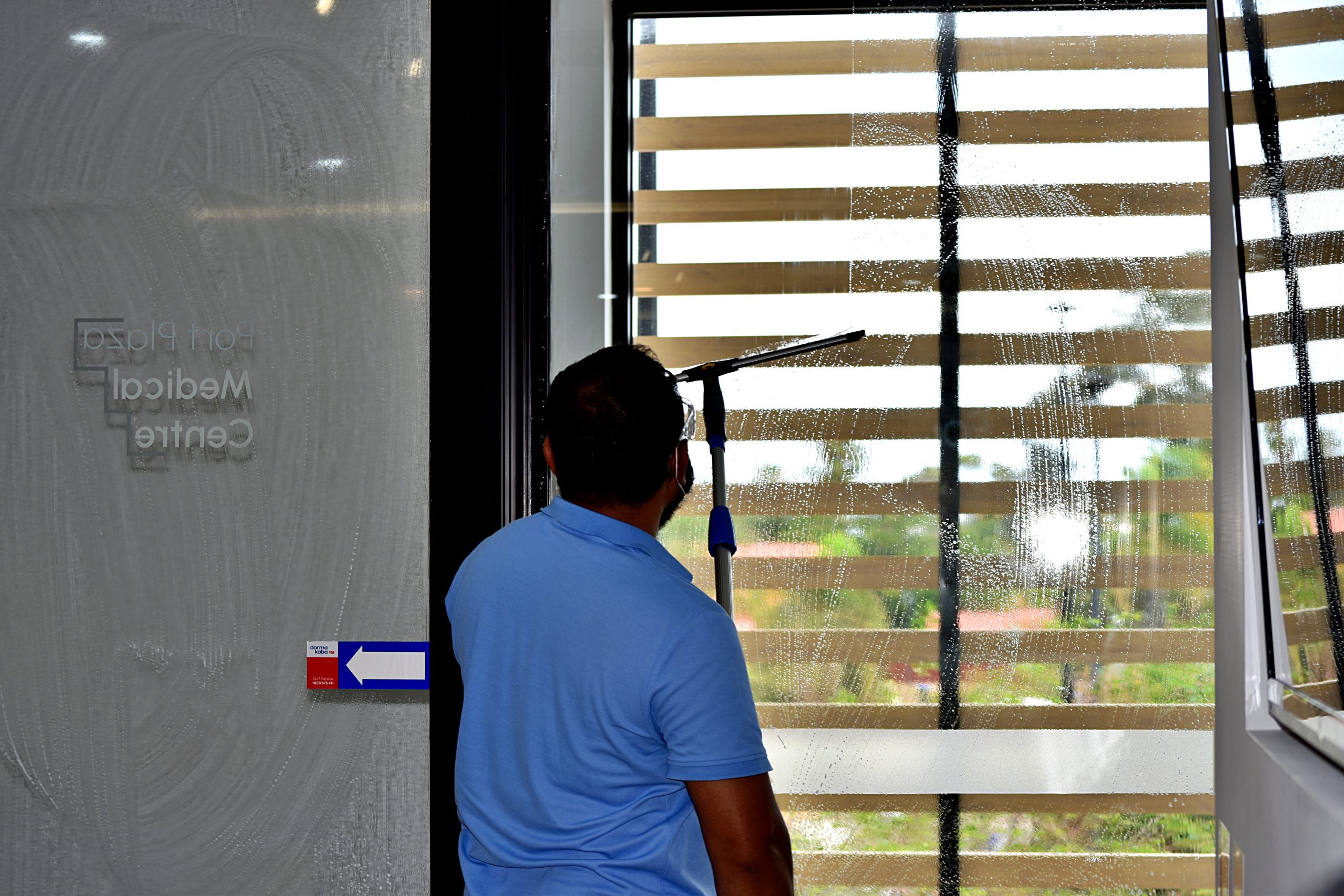
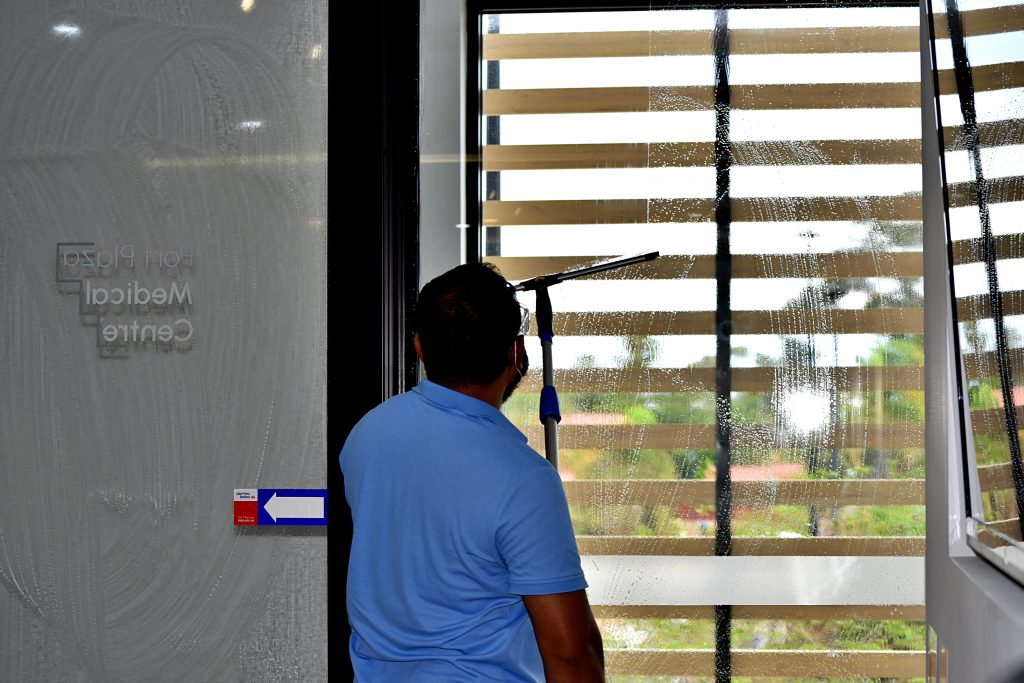
A squeegee with a slightly softer rubber blade performs better in cold conditions than a stiff one, which tends to skip and leave thin streak lines on cold glass. For multi storey buildings, a water fed pole system with purified water is often the better winter option, since it doesn’t rely on a chemical solution drying evenly across a large pane in cold, sometimes windy, conditions.
Timing the Clean
Professional crews working commercial buildings in winter usually avoid early morning frost windows and aim for the warmest part of the day, typically late morning through early afternoon. This single scheduling decision often does more for the finished result than any change in cleaning solution.
What Not to Use in Cold Weather
Avoid ammonia heavy glass cleaners on cold glass, as they can leave a hazy film that’s more noticeable in low winter light. Never use boiling or near boiling water on glass in cold conditions, since the temperature shock risks cracking, particularly on older single glazed commercial windows common in many older office and retail buildings.
Not Sure What Your Building Needs This Winter?
Ms Clean provides a free site assessment and tells you honestly what your windows actually need, no upselling.
Get a Free Assessment, call or book online today
Who Actually Needs This: The Businesses Winter Hits Hardest
Some commercial properties feel the effects of cold weather window grime far more than others. Here’s where it tends to matter most.
Offices and Corporate Buildings
Glass fronted offices and meeting rooms are often the first thing a client or candidate sees walking in. Condensation streaking on internal glass partitions is a common winter complaint in open plan offices, especially where heating runs constantly against cold external air. A scheduled winter clean, timed around the building’s heating cycle, keeps internal glass clear without constant re-cleaning.
Hospitals and Medical Centres
Hospital windows aren’t just about appearance. Natural light through clean glass has a documented effect on patient wellbeing and recovery times, which makes streaky, grimy winter windows more than a cosmetic issue. Medical facilities also have specific product requirements, since many cleaning solutions used elsewhere aren’t appropriate near patient areas. Cold weather cleaning for hospitals needs a product that’s both freeze resistant and safe to use in a clinical environment.
Gyms and Fitness Studios
Mirror walls and glass fronted studios fog and streak constantly in winter, thanks to the combination of body heat, sweat, and cold glass. Gyms are a high visibility business where members notice a smudged mirror or a foggy front window immediately. A weekly or twice weekly winter schedule, rather than the usual monthly clean, tends to be what keeps these spaces presentable through the colder months.
Retail Showrooms and Car Dealerships
Showroom glass is doing sales work. A foggy or streaked display window in the depths of winter undercuts everything else the business has invested in presentation. Cold weather is exactly when showroom glass needs the most attention, not the least, since shorter daylight hours mean customers are viewing displays under artificial light where streaks and haze show up more clearly.
Cafes and Restaurants
Steam from coffee machines and kitchens combines with cold external glass to create a stubborn winter film on shopfront windows, often worse than the usual grease buildup these businesses deal with year round. A cafe with a foggy or streaked window on a cold morning is sending the wrong signal to anyone walking past looking for somewhere warm to sit.
Childcare Centres and Schools
Viewing windows and glass partitions in childcare settings need to stay clear for both supervision and presentation, and many centres have specific requirements around the cleaning products used near children. A freeze resistant, low toxicity solution applied on a consistent winter schedule helps these facilities meet both safety and appearance expectations.
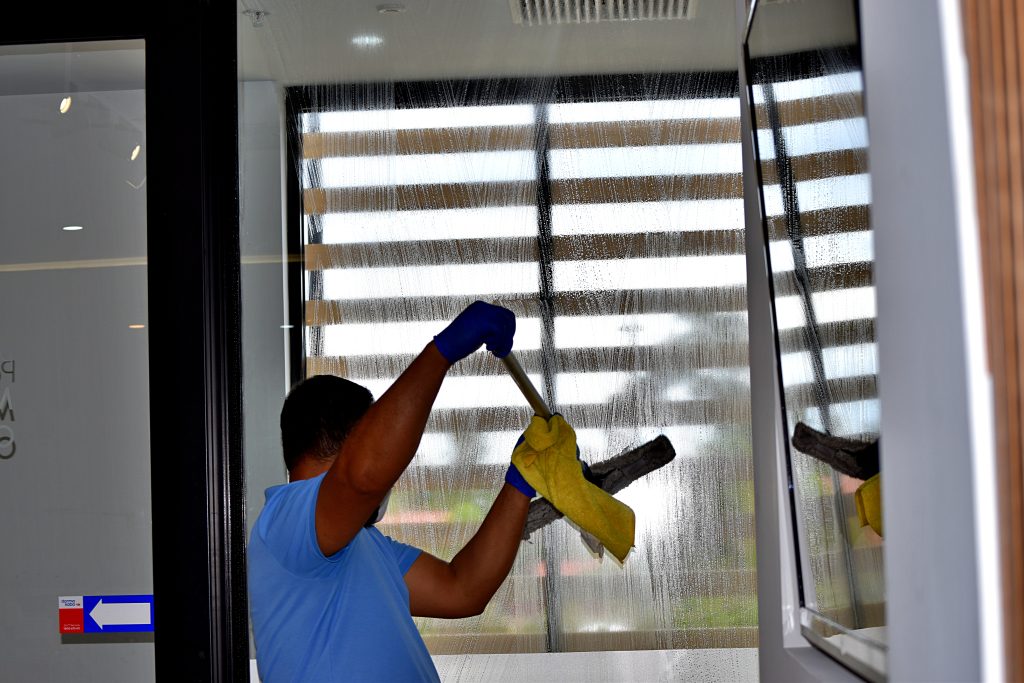
Indoor vs Outdoor: Two Different Cold Weather Problems
It’s worth separating these two issues, because the cause and the fix are different.
| Issue | Cause | Fix |
|---|---|---|
| Outdoor streaking and icing | Standard cleaner freezes or dries unevenly in cold outdoor air | Low freezing point solution, cool water, midday timing |
| Indoor condensation fog | Warm indoor air meeting cold glass surface | Address ventilation alongside cleaning, more frequent indoor clean |
| Salt and grit residue | Tracked in from car parks and footpaths in wet, cold weather | More frequent entrance area cleaning during winter months |
| Hazy film on glass | Ammonia based cleaner reacting with cold, dry winter air | Switch to alcohol based or purified water system |
How Often Should Commercial Windows Be Cleaned in Winter?
Winter often calls for more frequent cleaning, not less, particularly for businesses with high glass visibility or heavy indoor heating running against cold outdoor air.
| Business Type | Winter Frequency | Why |
|---|---|---|
| Office buildings | Monthly to fortnightly | Internal condensation builds faster against constant heating |
| Hospitals and medical centres | Weekly internal, monthly external | Patient areas need consistently clear, fog free glass |
| Gyms and fitness studios | Weekly to twice weekly | Heat and moisture from members fogs mirrors and glass fast |
| Retail and showrooms | Weekly | Shorter daylight means streaks are visible for longer each day |
| Cafes and restaurants | Weekly to twice weekly | Steam and condensation build up faster than regular grime |
| Childcare and schools | Weekly | Supervision and presentation both require consistently clear glass |
Safety Matters More When It’s Cold
This part rarely gets mentioned, but it should. Cold weather window cleaning carries genuine safety risks that go beyond just getting a streak free finish.
- Ice or frost on access ladders, scaffolding, or elevated work platforms significantly increases the risk of slips, which is why professional crews check surface conditions before starting any height work in winter
- Cold hands lose grip strength faster, which matters when handling tools at height or on wet surfaces
- Shorter daylight hours mean outdoor jobs need to be scheduled more carefully to avoid working in low light conditions
- Wet, cold surfaces around building entrances and loading areas need extra care from cleaning crews moving equipment in and out
How Ms Clean handles winter safety
Every winter job starts with a quick check of access points, ladder footing, and weather conditions before any work begins. If conditions aren’t safe, the job gets rescheduled rather than rushed. It’s a simple standard, but one that’s easy to skip if a cleaning provider is focused purely on getting through a job list.
DIY vs Professional: What’s the Real Difference in Winter
A facility manager or small business owner can absolutely manage basic indoor glass cleaning themselves through winter. Where it tends to fall short is on anything involving height, frequency, or specialist glass.
- Height and access. Anything above ground floor in cold, sometimes wet or icy conditions, is a genuine safety risk without the right equipment and training.
- Consistency. A business open daily with high traffic glass needs a reliable schedule, not an ad hoc clean when someone notices the windows looking bad.
- Product knowledge. Knowing which solution works on tinted glass, frosted partitions, or older single glazed panes without damaging them takes experience most internal staff don’t have time to build.
- Time. Facility staff and business owners generally have better use of their time than standing outside in winter trying to get a streak free finish on a cold pane.
Related Commercial Cleaning Services
- Commercial Window Cleaning, scheduled external and internal glass cleaning for offices, retail and healthcare
- Office Cleaning, daily and after hours cleaning contracts for corporate buildings
- Healthcare Facility Cleaning, infection control compliant cleaning for hospitals and medical centres
- Retail and Showroom Cleaning, presentation focused cleaning for dealerships and shopfronts
- Gym and Fitness Centre Cleaning, hygiene focused cleaning for high traffic fitness spaces
Frequently Asked Questions
Q1. What’s the best DIY solution for cleaning windows in cold weather?
A simple mix of water and isopropyl alcohol, roughly four parts water to one part alcohol, works well in cold conditions because it resists freezing far better than plain water or standard glass cleaner. For commercial buildings though, the bigger factor is usually timing and technique rather than the exact recipe.
Q2. Can you clean windows when it’s below freezing outside?
It’s possible but not ideal. Cleaning solution can freeze on contact with the glass before it has a chance to dry, leaving a patchy, streaked finish. Most professional crews wait for temperatures to climb above freezing, usually targeting late morning or early afternoon, even on cold winter days.
Q3. Why do my office windows fog up more in winter?
This is condensation, caused by warm indoor air meeting cold glass. It’s common in offices running constant heating against cold external temperatures and tends to be worse on single glazed or older windows. More frequent internal cleaning, alongside reviewing ventilation, usually resolves it.
Q4. Does hot water work better for cleaning windows in winter?
No, and it can actually cause damage. Hot water on cold glass risks thermal shock, which can crack or stress the pane, particularly on older single glazed commercial windows. Cool or room temperature water is the safer and more effective choice year round.
Q5. How often should a hospital clean its windows in winter?
Most hospitals and medical centres benefit from weekly internal glass cleaning and monthly external cleaning through winter, given the importance of natural light in patient areas and the higher humidity levels common in clinical environments.
Q6. Is it safe to clean windows at height in winter?
Yes, but it requires extra care. Frost or ice on access equipment, shorter daylight hours, and reduced grip strength in cold hands all increase risk. A professional crew checks conditions before starting and will reschedule rather than work in unsafe conditions.
Q7. What should businesses avoid using on windows in cold weather?
Avoid ammonia heavy commercial cleaners, which can leave a hazy film more noticeable in low winter light, and never use boiling or very hot water, which risks cracking cold glass through thermal shock.
Q8. Does Ms Clean offer winter window cleaning for commercial properties?
Yes. Ms Clean provides scheduled and one off commercial window cleaning through winter for offices, hospitals, gyms, retail showrooms, cafes, and childcare centres, with crews trained on cold weather technique and safety.
Keep Your Building Looking Sharp All Winter
Ms Clean handles commercial window cleaning year round, with a winter approach that actually works in the cold. Free quote, no pressure.
Book a Free Quote, call 0480 321 027 or enquire online today