A chair that used to glide across the floor now drags, sticks, or makes a soft grinding noise every time someone rolls back from their desk. Nine times out of ten, the problem is not the chair itself. It is the wheels, packed with hair, dust, carpet fibre and whatever else has been ground into them over months of daily use.
This guide walks through exactly how to clean caster wheels properly, what tools actually work, when a squirt of WD40 is fine and when it makes things worse, and when a wheel is too far gone to bother cleaning at all.
Quick Answer
Cleaning caster wheels comes down to three steps. Remove the tangled hair and debris wrapped around the axle using scissors and needle nose pliers. Wash and degrease the wheel with mild soap and water or a plastic safe cleaner. Finish with a light coat of silicone lubricant on the moving parts so the wheel spins freely again.
Why Office Chair Wheels Get Dirty So Fast
Caster wheels sit close to the floor and roll across it constantly, making them a magnet for the kind of mess most people never think to check. Hair, dust, carpet fibre, food crumbs and general grit wrap around the axle every time the chair moves, and because the wheel is mostly hidden under the base, nobody notices until rolling starts to feel like dragging a shopping trolley with a bad wheel.
In a commercial office with dozens of chairs in daily use, this adds up fast. A handful of dirty caster wheels is a minor annoyance. A whole floor of chairs that no longer roll properly slows people down, damages carpet over time from the extra friction, and looks worse than it needs to when a client walks past a workstation.
What You Need Before You Start
A pair of scissors or small, sharp tweezers. A set of needle nose pliers for pulling loosened clumps free. A damp rag and mild dish soap, or a light plastic safe cleaner. An old toothbrush or butter knife for scraping off stuck-on residue. A can of silicone lubricant, not an all purpose oil. A paper towel for wiping away excess.
Most of this is already in a kitchen drawer or cleaning cupboard, so you rarely need to buy anything special before you start.
Step One: Remove the Debris
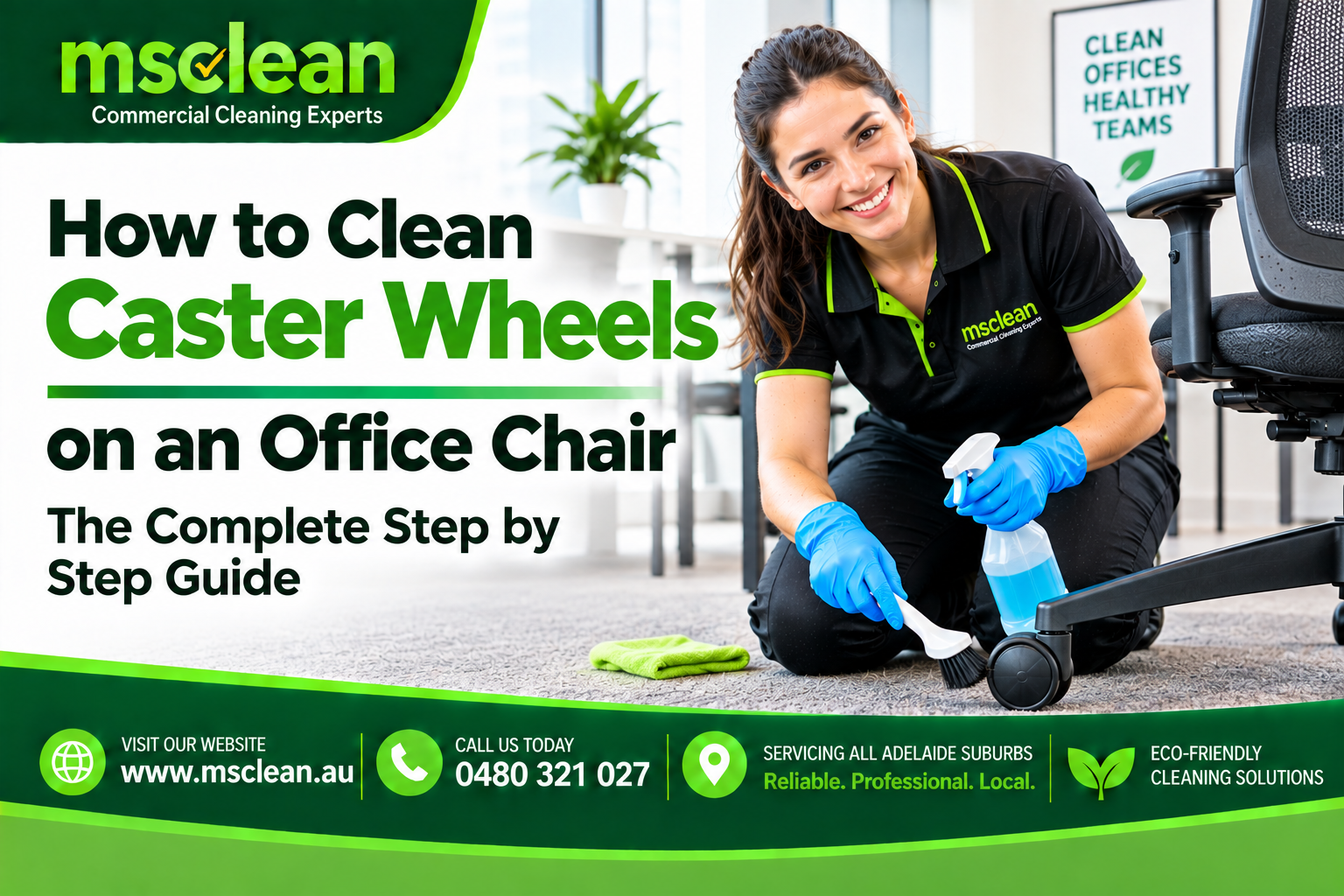
Flip the chair upside down onto a soft cloth or table so the wheels face up and are easy to reach. Look closely at each wheel, and you will usually find a tightly wound band of hair, thread or dust wrapped around the axle, often packed in hard enough that it stops the wheel from spinning at all.
Use scissors or small tweezers to cut through the wound material rather than trying to pull it out whole, since a single cut usually lets the whole tangle loosen in one go. Once cut, needle-nose pliers make it much easier to grab and pull the loosened clumps free without cutting a finger on the axle pin. Keep going until the wheel spins freely by hand with no resistance or catching.
Step Two: Wash and Degrease
Once the wheel spins freely, wipe the outside and inside of the plastic housing with a damp rag and a small amount of mild dish soap, or spray a light, plastic-safe cleaner onto the cloth instead of directly onto the wheel. This lifts the general grime that built up around the tread and housing over time.
For anything sticky or stubborn still clinging to the tread, a butter knife or an old toothbrush works well to scrape it loose without damaging the plastic. Let the wheels dry completely before putting the chair back down, since trapping moisture inside the housing just creates a fresh place for grime to stick next time.
Step Three: Lubricate the Moving Parts
A clean wheel that still drags almost always needs lubrication, not more cleaning. Apply a small amount of silicone lubricant directly into the axle and any visible spinning joints, then wipe away any excess drips with a paper towel so it does not transfer onto the floor or carpet.
Spin each wheel by hand a few times to work the lubricant through the mechanism properly before setting the chair back down. This is the step most people skip, and it is usually the difference between a wheel that spins for a week before sticking again and one that rolls smoothly for months.
Can You Use WD40 on Caster Wheels
WD-40 can loosen a jammed wheel in an emergency, and it is fine as a one-off fix if a chair is stuck and you need it working right now. As a long-term solution, it is not a great choice because it attracts dust and grit rather than repelling it, so the wheel often gunks up again faster than before. Silicone lubricant is the better option for anything beyond a quick fix, since it lubricates without leaving the same sticky residue behind.
How to Disassemble Office Chair Wheels
Most office chair casters attach in one of two ways. Stem-mounted wheels press into a socket under the chair base and usually pop free with firm, steady pulling, sometimes helped by a flat tool wedged gently underneath for leverage. Plate-mounted wheels are held on with small screws through a flat bracket, so you need to unscrew them before the wheel comes off.
If a wheel will not budge with reasonable pulling, check whether it is one of the less common locking or brake-style casters, which sometimes need a small release tab pressed before they slide free.
When to Replace Instead of Clean
Cleaning brings most dirty wheels back to life, but some are simply worn out. If the wheel itself is cracked, flat on one side, or the rubber tread has visibly worn away, cleaning will not fix the underlying problem. Wheels are inexpensive and widely available in standard sizes, so replacing a genuinely worn set is often more practical than repeatedly fighting with one that keeps sticking no matter how well it is cleaned.
A Note for Commercial Offices
Chair maintenance is a small task that often gets overlooked in commercial cleaning routines, since it sits outside the usual desk, floor, and bathroom checklist. For offices with many workstations, a periodic wheel check alongside regular cleaning keeps chairs rolling properly and reduces unnecessary carpet wear from dragging wheels. It is a small addition worth raising with whoever manages your office cleaning schedule, particularly in busy commercial spaces where dozens of chairs are in constant daily use.
Frequently Asked Questions
Can you use WD40 on caster wheels? WD40 works as a short-term fix to free up a stuck wheel, but it isn’t ideal for ongoing use because it attracts dust and grit. Silicone lubricant lasts longer and keeps the wheel cleaner over time.
How do I clean my castor wheels? First, remove any tangled hair and debris from around the axle, wash the wheel with mild soap and water or a plastic-safe cleaner, dry it completely, then apply a light silicone lubricant to the moving parts.
How do I remove hair from my office chair wheels? Flip the chair over, cut through the tangled hair wrapped around the axle with scissors or small tweezers, then pull the loosened pieces free with needle nose pliers until the wheel spins without catching.
How do I disassemble the wheels on my office chair? Check whether the wheel is stem-mounted, which usually pulls straight out of its socket with firm pressure, or plate-mounted, which needs the small screws removed before the wheel comes free.
How often should office chair wheels be cleaned? In a busy commercial office, checking wheels every few months is a reasonable habit, since hair and dust build up gradually without anyone noticing until the chair starts dragging.
Why does my chair still stick after cleaning? If a wheel still drags after cleaning, it usually needs lubrication rather than another round of cleaning. Apply a small amount of silicone lubricant to the axle and spin the wheel by hand to work it through the mechanism.
Conclusion
Most sticking, dragging office chairs can be fixed with three simple steps: clear trapped hair and debris, wash and dry the wheel properly, then lubricate with silicone rather than an all-purpose oil. Keep WD-40 as an emergency fix, not a regular habit, and replace wheels outright once the tread is cracked or worn, rather than fighting a losing battle with cleaning alone.
If chair wheels are the least of your office’s cleaning concerns and the rest of the space needs proper attention too, Ms Clean provides regular commercial office cleaning across Adelaide, South Australia. Call 0480 321 027 or visit the office cleaning Adelaide page for a free quote.
Call Now
Ms clean Au
Address: 71 Alexandra Street, Prospect, SA-5082
M : 0480 321 027
E-Mail: contact@msclean.au