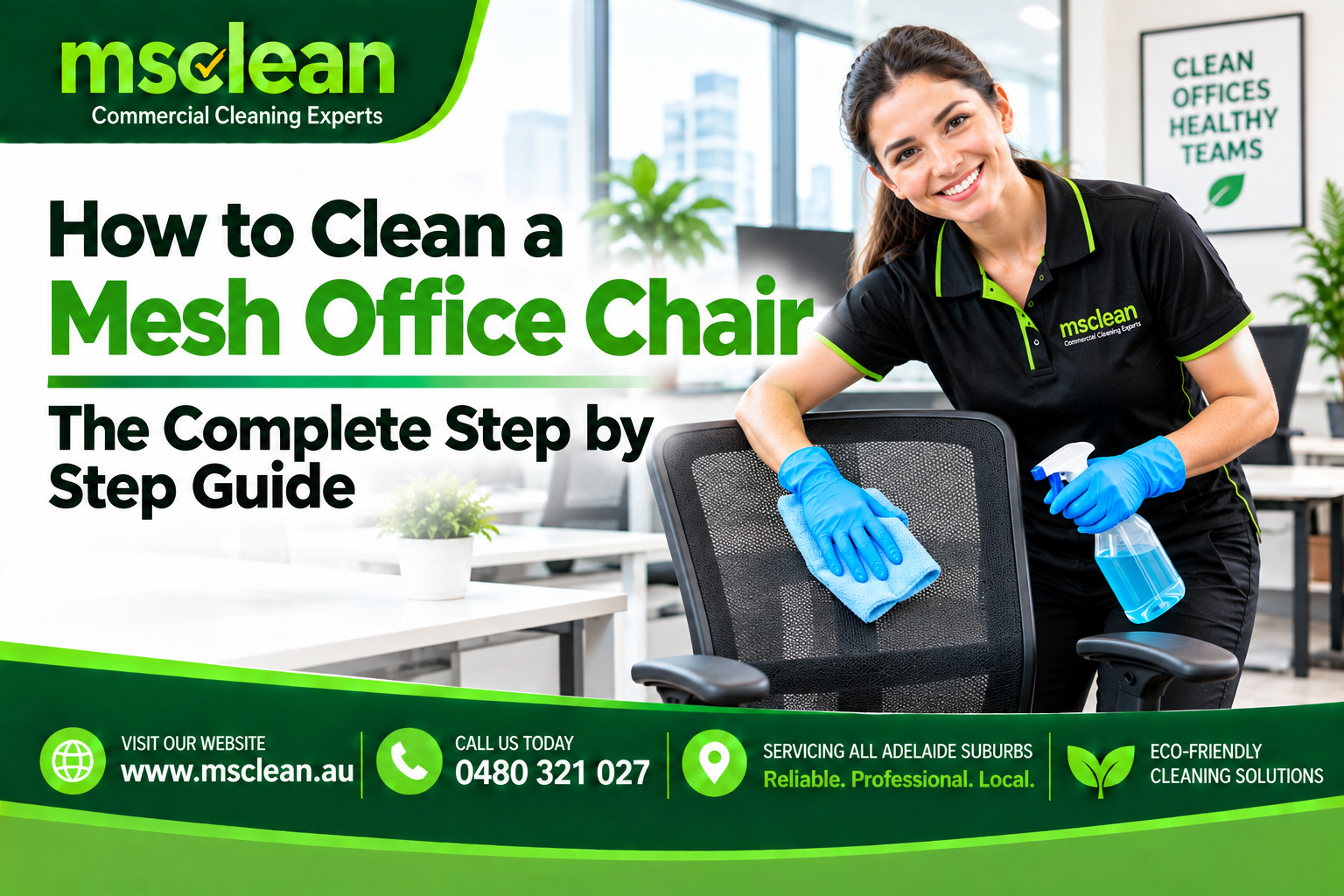
To clean a mesh office chair, vacuum loose debris using a soft brush attachment, wipe the mesh with mild soapy water using a well wrung damp cloth, gently agitate any stains with circular motions, rinse soap residue with a clean water dampened cloth, clean the frame and casters separately, and let the chair air dry completely in a well ventilated space before anyone sits on it. The entire process takes approximately 20 to 30 minutes for a standard office chair. The most important rule is to avoid soaking the mesh, as it can damage the internal padding, mechanisms, and structural components underneath.
How do you clean a mesh office chair?
To clean a mesh office chair, vacuum up loose debris, wipe the mesh with a damp cloth and mild soapy water, then let it air dry completely. You’ll need a vacuum cleaner with a soft brush attachment, microfibre cloths, mild dish soap, warm water in a spray bottle or bowl, and a soft-bristled brush or old toothbrush for stubborn spots. The step by step process involves vacuuming the chair first to remove loose dust, hair, and crumbs from the mesh and seams. Then mix a solution of warm water with a few drops of mild dish soap, approximately one teaspoon per quart of water. Dampen the mesh by lightly misting or wiping with a well wrung microfibre cloth, avoiding soaking to protect internal padding and mechanisms. Wipe in circular motions with minimal pressure and use a soft toothbrush for stubborn spots, being careful not to fray the weave. Rinse with a clean cloth dampened with plain water to remove soap residue that attracts dirt. Clean the plastic or metal frame with a damp cloth, and turn the chair over to pull tangled hair and debris from the casters. Pat dry and let the chair air dry completely in a well ventilated room before sitting on it.
How to clean mesh office chairs?
Mesh office chairs are everywhere in Adelaide workplaces right now. They replaced old fabric padded chairs in most modern offices over the past decade because they breathe better, look sleeker, and are supposed to be easier to maintain.
That last part is where most people run into trouble.
Mesh looks easy to clean because you can see through it. What is actually happening inside that weave throughout a working week is a different picture. Skin cells. Sweat. Fine dust from Adelaide’s dry air. Food crumbs. The microscopic debris of eight hours per day of close human contact. In open plan commercial offices where multiple people may use the same chair, the accumulation compounds every single day.
The trap people fall into is assuming mesh can be cleaned like a hard surface. You cannot just spray it and wipe it. Saturating the mesh pushes moisture into the padding and metal mechanisms, causing rust, odour, and structural damage that shows up after the cleaning, not the next day.
This guide covers the full process. What to use. How to clean it properly without damaging it. How to handle specific stains. How to clean the frame and casters most people ignore. And the signals that tell you the chair in your office needs professional attention rather than another round with a damp cloth.
What You Need Before You Start
Gather everything before you begin. Starting with the wrong product or stopping mid clean to find a cloth costs time and can leave a wet mesh surface sitting while you search.
Essential supplies:
A vacuum cleaner with a soft brush attachment. This is the most important tool for cleaning mesh chairs. The brush attachment removes debris from inside the weave without snagging or stretching the mesh fibres. A standard vacuum head without a brush attachment can pull the mesh and distort the weave.
Two or three clean microfibre cloths. Microfibre is ideal for mesh chair cleaning because it is lint free, absorbs well, and is gentle enough to use on the mesh surface without fraying the weave.
Mild dish soap. Standard dish soap diluted in warm water is the safest and most effective cleaning solution for most mesh chair types. One teaspoon per litre of warm water is a sufficient concentration. More soap doesn’t clean better; it leaves more residue that attracts dirt.
Warm water in a spray bottle or bowl. A spray bottle gives you control over how much moisture you apply to the mesh. Over saturation is the most common mistake people make when cleaning mesh chairs, and a spray bottle makes it easier to apply a light mist rather than pouring or wiping on too much liquid.
Optional but useful: a soft bristled brush or old toothbrush for stubborn spots in the mesh weave. A toothbrush gives you enough mechanical action to dislodge set in staining without the force that would damage the mesh.
What not to use on mesh office chairs:
Bleach or bleach based products. These can discolour the mesh fabric and degrade the synthetic materials most mesh backs are made from.
Strong alcohol or solvent based cleaners. These can break down the adhesive that bonds mesh panels to chair frames and weaken the mesh fabric itself.
Rough scrubbing pads or abrasive cloths. Anything abrasive can snag and distort the mesh weave. Use only microfibre and soft cloths.
Excessive water. The golden rule for mesh chair cleaning is never to soak the mesh. Moisture that reaches the padding layer below the mesh creates conditions for mould and rust in the metal frame components. Pat the mesh damp; do not soak it.
How to Clean a Mesh Office Chair — Step by Step
Step 1: Vacuum the Chair Thoroughly
Use the soft brush attachment to remove loose dust, hair, and crumbs from the mesh and seams.
Start at the top of the mesh backrest and work downward. The brush attachment dislodges debris sitting in the weave and picks it up without pushing it deeper into the mesh or scratching the surface.
Run the attachment along every seam line where the mesh meets the frame. Debris collects in these joins and is invisible from a normal viewing angle. The seams are often the dirtiest sections of the car, and the ones you miss because they don’t look dirty until you look closely.
Vacuum the seat cushion or seat mesh in the same systematic way. Move in overlapping rows from the back of the seat to the front, then along the sides and edges.
Vacuum the underside of the seat if it is accessible. Gently turn it to check for debris on the underside of the backrest panel. Dust falls downward through mesh surfaces and accumulates on horizontal components below.
This vacuuming step is not optional. Applying liquid to a chair that has not been vacuumed first turns dry debris into damp grime that is harder to remove and more likely to be pushed into the mesh weave during the wet cleaning stage.
Step 2: Mix the Cleaning Solution
Combine warm water with a few drops of mild dish soap, approximately one teaspoon per quart of water.
Warm water is more effective than cold water at dissolving the body oils, food residue, and soiling that accumulates on office chair mesh. It is not hot water; hot water can affect the shape of synthetic mesh fibres and cause shrinkage or distortion on some chair types.
The solution should look very slightly soapy when you mix it. Not foamy. Not visibly soapy. A barely there level of suds is the right concentration.
For commercial environments where you are cleaning multiple mesh chairs in a single session, mix a larger batch in a bowl and use it across all chairs in the session rather than remixing for each chair.
Step 3: Dampen the Mesh — Do Not Soak It
Lightly mist the mesh or wipe it with a well wrung microfibre cloth. Avoid soaking the fabric to protect internal padding or mechanisms.
If you are using a spray bottle, apply one or two light mists to a section of the mesh. The mesh should look slightly damp, not wet. If water runs or drips from the mesh, you have applied too much.
If you are using a cloth, wring the cloth out thoroughly before applying it to the mesh. The cloth should feel damp when you press it against your palm, but no water should drip when you hold it up.
Work in sections rather than wetting the entire chair at once. This gives you control and ensures you rinse and dry each section before moving on.
Step 4: Clean the Mesh in Circular Motions
Wipe in circular motions with minimal pressure. Use a soft toothbrush for stubborn spots, being careful not to fray the weave.
Apply the damp soapy cloth to the mesh surface and wipe in gentle circular motions. Circular motions lift soiling from the weave from multiple angles rather than simply pushing it sideways.
Use minimal pressure. Mesh chair fabric is not a hard surface; pushing hard does not clean better; it risks stretching or distorting the weave. Consistent gentle circular motions with a damp cloth are more effective than scrubbing.
For visible stains or set-in marks, use the toothbrush with the soapy solution and work it gently into the stained weave with short circular motions. The toothbrush gives you enough precision to target the stained area without disturbing the clean sections around it.
Work from the top of the backrest downward, then address the seat surface. The same clean to dirty, top to bottom principle that applies to any surface cleaning applies to mesh chair cleaning.
Step 5: Rinse Soap Residue Off the Mesh
Wipe the chair down with a clean cloth dampened with plain water to remove residue that attracts dirt.
Gently press a microfibre cloth dampened with clean water (no soap) over each section cleaned in Step 4. This rinse step removes the soap residue from the mesh. Soap left in the mesh weave after cleaning behaves like a dirt magnet; it remains slightly tacky after drying and attracts airborne dust and particulate faster than untreated mesh.
Rinse in the same section by section pattern used for cleaning. Replace the cloth or use a fresh section of cloth for each section to remove soap residue rather than redistribute it.
Step 6: Clean the Frame, Armrests, and Non Mesh Components
Wipe the plastic or metal frame with a damp cloth.
The frame, armrests, lumbar support housing, and seat base of most mesh office chairs are plastic or metal, not mesh. Clean these surfaces differently from the mesh panels, and they’re much simpler to address.
A microfibre cloth dampened with the soapy solution cleans most plastic and metal chair frames effectively. Wipe across each section firmly. Unlike the mesh, plastic and metal frame surfaces can handle more pressure and a wetter cloth.
Armrests deserve particular attention. Armrests on commercial office chairs accumulate skin oil, hand lotion, and contact residue from daily use. They are often the dirtiest part of an otherwise clean-looking chair because continuous skin contact is concentrated on a small surface area.
After cleaning, rinse the frame with a clean, water-dampened cloth, using the same residue-removal approach as the mesh rinse step.
Step 7: Clean the Casters
Turn the chair over to pull tangled hair and debris out of the casters.
Casters are the most neglected part of office chairs in commercial environments, and they also most directly affect how the chair functions. Hair, thread, and carpet fibres wrap around the caster axles and eventually prevent the casters from rolling smoothly. In open plan commercial offices where chairs roll constantly throughout the day, caster resistance creates real ergonomic problems for the people using the chairs.
Flip the chair onto its side or completely upside down. Use scissors or a seam ripper to cut through any material wrapped around the caster axles. Pull the freed material away from the axles with your fingers or a narrow tool. Wipe the caster housing and wheel surface with a damp cloth.
For commercial offices where chairs are used intensively on hard floors, include caster cleaning in every chair-cleaning cycle. For lighter use in carpeted offices, clean the casters every second or third chair cleaning.
Step 8: Dry the Chair Before Anyone Sits on It
Pat dry with a towel and let the chair dry completely in a well ventilated room before sitting on it.
Press a dry microfibre cloth or a clean towel gently against the mesh surface to absorb surface moisture. This patting step removes most remaining surface water from the mesh and significantly reduces total drying time.
Position the chair in a well-ventilated area. If the room has air conditioning, run it on dry mode rather than cooling mode during the drying period to remove humidity from the air around the chair.
Do not use a hair dryer, a fan heater, or any direct heat source to speed drying. Heat can distort synthetic mesh fibres and permanently change the mesh’s shape and texture.
A well cleaned mesh office chair dried in a ventilated room at room temperature is typically dry within one to three hours, depending on how much moisture was applied during cleaning. In Adelaide’s dry climate, drying is faster in summer and slower in the more humid months.
The chair must be completely dry before anyone sits in it. Sitting on a damp mesh chair before the mesh and underlying padding components are dry creates odour and can compress moisture into the padding where it is harder to dry.
How to Remove Specific Stains From Mesh Office Chairs
Coffee and Tea Stains on Mesh Office Chairs
Coffee and tea are the most common stains on office furniture across Adelaide commercial workplaces. They are tannin based and respond well to treatment when addressed quickly.
For fresh coffee or tea stains on mesh: blot immediately with a clean, dry cloth to absorb as much liquid as possible before it spreads through the weave. Apply the mild soap and water solution to the stained area and work gently with a circular motion. Rinse with clean water and blot dry.
For dried coffee or tea stains: mix warm water, a small amount of white vinegar, and a few drops of dish soap. Apply to the stained area, let sit for two to three minutes, then gently work it out with a toothbrush in circular motions. Rinse thoroughly to remove all vinegar and soap residue.
Ink Stains on Mesh Office Chairs
Ink stains on mesh fabric require a solvent approach. Isopropyl alcohol applied to a cotton swab is the right tool for ink on mesh. Dab the cotton swab onto the ink stain from the outside edge, working inward. Rotate to a clean section of the swab between each dab to prevent spreading. Continue until no more ink transfers.
Rinse the treated area with clean water immediately after the alcohol treatment to remove any alcohol residue. Allow to dry completely. For large or old ink stains on commercial mesh chairs, professional upholstery cleaning is the more appropriate approach.
Sweat and Body Oil Stains on Mesh Office Chairs
Sweat and body oil stains are the most common form of soiling on commercial mesh office chairs and often go unnoticed until you inspect the chair closely. These stains accumulate in the upper back area of the mesh backrest and in the lumbar contact area.
The standard mild soap and water cleaning process in Section 2 addresses light sweat and body oil build up. For significant build up on heavily used commercial chairs, add a small amount of white vinegar to the cleaning solution. Vinegar neutralises alkaline compounds in sweat residue and lifts body oil from the mesh weave more effectively than soap alone.
Food and Grease Stains on Mesh Office Chairs
Grease and food oil stains require a degreasing approach. Sprinkle a small amount of baking soda over a fresh grease stain to absorb the oil before applying any liquid. Leave for ten to fifteen minutes, then brush off gently. Follow with the standard soap and water cleaning process, using dish soap which is specifically formulated to cut grease.
Commercial Mesh Office Chair Cleaning in Adelaide
The process described above applies to a single residential or commercial chair cleaned individually. Commercial environments add three layers of complexity: the volume of chairs to be cleaned, the scheduling constraints of a working environment, and the documentation requirements of regulated facilities.
Volume and Efficiency in Adelaide Commercial Offices
An open plan Adelaide office with fifty staff members has fifty chairs to maintain. A call centre or shared workspace facility may have significantly more, with higher usage intensity per chair due to shift arrangements where multiple staff members use the same chair across a day.
At commercial scale, systematic mesh chair cleaning is scheduled as part of a larger office maintenance programme rather than addressed ad hoc when chairs start to look dirty. Ms Clean structures commercial office chair cleaning as a periodic programme conducted outside operating hours, typically quarterly for standard usage environments and monthly for high intensity commercial seating in call centres, shared workspaces, or facilities with high throughput.
After hours scheduling ensures that chairs are cleaned and dry before the first staff member arrives the next morning, with no disruption to the working day and no risk of staff using a damp chair.
Documentation for Regulated Commercial Environments
Medical centres, aged care facilities, NDIS properties, and childcare environments that use mesh office seating in staff areas or reception zones require cleaning documentation for regulatory compliance purposes. Ms Clean provides completion records formatted for compliance use in regulated environments, including the products used, the cleaning method, the date and time of service, and the responsible team member.
How Often Should Commercial Mesh Office Chairs Be Cleaned?
The right frequency depends on usage intensity and the environment.
| Commercial Setting | Usage Level | Recommended Cleaning Frequency |
| Standard office, one occupant per chair | Moderate | Quarterly professional clean |
| Open plan office, hot desking, shared seating | High | Monthly professional clean |
| Call centre or shift work, multiple users per chair | Very High | Monthly or bimonthly |
| Medical or allied health staff seating | Moderate to High | Quarterly with documented record |
| Childcare and educational environments | High | Monthly or bimonthly |
| Reception and waiting room seating | Variable | As part of general upholstery clean schedule |
Why Mesh Office Chair Cleaning Matters for Adelaide Commercial Businesses
Maintaining clean mesh office chairs is not simply about appearance. In a commercial workplace, the condition of office seating directly reflects the environment’s overall hygiene sth and wellbeing. Mesh office chairs that accumulate sweat, body oil, and environmental particulate over months of use create a hygiene issue that affects the people sitting in them for eight hours a day. Regular professional cleaning reduces the biological load on the seating surface and contributes to a healthier working environment.
Equipment longevity. Mesh chairs are a significant capital investment in most commercial offices. Mesh office chairs require specific cleaning methods to maintain performance and appearance. Regular cleaning prevents soiling from permanently discolouring the mesh, prevents debris accumulation from degrading caster function, and prevents moisture from causing rust in metal frame components. A chair that is regularly maintained lasts significantly longer than a chair that is only addressed when it is visibly dirty.
Professional presentation. The condition of office seating is one of the first things clients and visitors notice when they enter a commercial premises. Clean, well-maintained mesh office chairs signal a well-managed workplace, just as clean floors and tidy reception areas do.
WHS and infection control. In environments with shared seating, call centres, hot-desking environments, and medical staff areas, cleaning office chairs is part of the facility’s infection control obligations under the Work Health and Safety Act 2012 (SA). Regular cleaning documented as part of a programme demonstrates the PCBU’s active management of this hygiene risk.
Why you choose MS Clean?
MS Clean has provided professional office chair cleaning and commercial upholstery cleaning services to Adelaide businesses since 2015. We clean mesh office chairs, ergonomic seating, executive leather chairs, and reception lounge seating in law firms, financial advisory practices, medical centres, open plan commercial offices, call centres, and shared workspaces across Adelaide CBD, Norwood, Glenelg, Prospect, Mawson Lakes, Salisbury, Marion, and all surrounding suburbs. The guidance in this article reflects direct operational experience with the specific mesh chair types common in Adelaide commercial environments and the particular maintenance challenges created by Adelaide’s dry summer heat and heavy air conditioning use.
Signs That a Mesh Office Chair Needs Professional Cleaning
These situations go beyond what the DIY process above can address and are better handled by professional commercial upholstery cleaning.
Persistent odour after cleaning. A mesh chair that smells like sweat, body odour, or anything biological, even after a thorough cleaning, may have odour compounds embedded in the padding below the mesh surface. Surface cleaning cannot reach the source of the smell. Enzyme based professional deodorising treatment is required to break down the odour compounds at the source.
Visible mould on the mesh or frame. Mould on a mesh office chair indicates that the chair has been consistently wet for an extended period, typically from inadequate drying after previous cleaning attempts or from a spill that was not addressed. Professional cleaning with antimicrobial treatment and the replacement of any water damaged padding is required.
Permanent discolouration across a large area. Large area discolouration that does not respond to multiple cleaning passes has either been set by heat, by incorrect products, or has been present for so long that the staining compound has bonded chemically with the mesh fibres. Professional assessment can determine whether the discolouration is treatable.
A commercial fleet of chairs due for scheduled maintenance. When the volume of mesh chairs in an Adelaide commercial environment makes ad hoc cleaning impractical, and a systematic quarterly or monthly professional programme is the efficient approach, Ms Clean provides fixed-price commercial office chair cleaning across all Adelaide metro suburbs.
FAQs — How to Clean a Mesh Office Chair
How do you clean a mesh office chair without damaging it?
Vacuum the mesh thoroughly with a soft brush attachment first, then apply a mild soap and water solution to a well wrung microfibre cloth and wipe in gentle circular motions. Never soak the mesh. Rinse with a clean water dampened cloth and allow it to air dry completely before anyone sits on the chair. Avoid bleach, alcohol-based cleaners, abrasive scrubbing pads, and direct heat when drying.
How often should mesh office chairs be cleaned?
In a standard single occupant office, quarterly professional cleaning is appropriate. In open plan offices with hot desking or multiple users per chair, monthly professional cleaning is the right frequency. High intensity environments like call centres and shared workspaces benefit from monthly or bimonthly cleaning. Between professional services, wipe down the armrests and frame weekly with a damp cloth.
Can you use a spray and wipe product on a mesh office chair?
No. Standard spray and wipe cleaning products contain chemicals that can discolour mesh fabric, break down adhesives that bond mesh panels to chair frames, and degrade synthetic mesh fibres over time. Use only mild dish soap diluted in warm water, or a purpose made upholstery cleaner appropriate for the mesh fabric type.
How do you clean the casters on a mesh office chair?
Turn the chair over and use scissors or a seam ripper to cut through any hair or thread wound around the caster axles. Pull the freed material away from the axles and wipe the caster housing with a damp cloth. Caster cleaning is especially important in open-plan commercial offices where chairs roll continuously across hard floors throughout the day.
How do you remove coffee stains from a mesh office chair?
For fresh coffee stains, blot immediately with a dry cloth to absorb as much liquid as possible, then apply the mild soap and water solution and work gently with a circular motion. For dried coffee stains, mix warm water, a small amount of white vinegar, and a few drops of dish soap; apply to the stain, let sit for two to three minutes, then gently work with a soft toothbrush. Rinse thoroughly after treatment.
How do you dry a mesh office chair after cleaning?
Pat the mesh surface with a dry microfibre cloth or towel after cleaning to absorb surface moisture. Position the chair in a well ventilated room. If air conditioning is available, run it in dry mode to reduce humidity around the chair. Allow the chair to air dry for one to three hours before anyone sits on it. Never use a hair dryer or direct heat source to speed drying, as this can distort synthetic mesh fibres.
Do you need to clean mesh office chairs differently in commercial environments?
The cleaning method is the same, but the scale, scheduling, and documentation requirements differ. Commercial mesh chair cleaning is scheduled outside operating hours to avoid disruption, structured as a systematic programme across all chairs in the facility, and documented for compliance purposes in regulated environments like medical centres, aged care, and childcare facilities. Ms Clean provides commercial mesh office chair cleaning across all Adelaide metro suburbs with after hours scheduling and compliance documentation where required.
How do you prevent mesh office chairs from getting dirty quickly?
Regular vacuuming with a soft brush attachment once a week removes dry debris before it accumulates in the weave. Wiping down armrests with a damp cloth regularly prevents body oil build up. Ensuring staff do not eat at their desks directly over the chair seat reduces food debris accumulation. Booking professional cleaning on a scheduled programme, rather than waiting until the chairs look dirty, prevents the kind of set-in soiling that requires multiple treatment passes to address.
Actionable Takeaways
1. Always vacuum before applying any liquid to a mesh chair. This is the step most people skip, and it prevents the biggest problems. Vacuuming first lifts loose debris away from the chair rather than turning it into damp grime during the wet cleaning stage.
2. Wring the cloth out more than you think you need to. The most common mesh chair cleaning mistake is applying too much moisture. A cloth that feels barely damp to the touch is the right level of wetness for mesh chair cleaning. If water drips from the cloth when you hold it up, it is too wet.
3. Do not skip the rinse step. Soap residue left in the mesh weave attracts future soiling faster than untreated mesh. A clean water rinse after cleaning extends the time between professional cleans by preventing the soap residue from acting as a dirt magnet.
4. Include the casters in every chair clean. The casters are the most consistently neglected component and the most directly functional. Hair and debris wrapped around caster axles make chairs harder to move and create WHS risks in workplaces where staff need to move fluidly between positions.
5. Schedule commercial mesh chair cleaning as a programme, not a reactive task. Chairs that are cleaned quarterly in a scheduled programme never become the kind of problem that requires extended professional treatment. Chairs cleaned only when they visibly need it usually require two to three times the effort of regularly maintained chairs.
6. If the chair smells after cleaning, the issue is below the mesh surface. Surface cleaning cannot address odour compounds embedded in the padding layer. Professional enzyme treatment is the appropriate response for a chair that smells despite being surface clean.
Conclusion
Your mesh office chairs spend more time in contact with the people who use them than almost any other surface in the building. They deserve more than a wipe down when they start to look bad.
Ms Clean provides professional mesh office chair cleaning and commercial upholstery cleaning across all Adelaide metro suburbs. Quarterly or monthly programme pricing available. After hours scheduling as standard. Fixed price confirmed before we start.
Call Now
Ms clean Au
Address: 71 Alexandra Street, Prospect, SA-5082
M : 0480 321 027
E-Mail: contact@msclean.au