
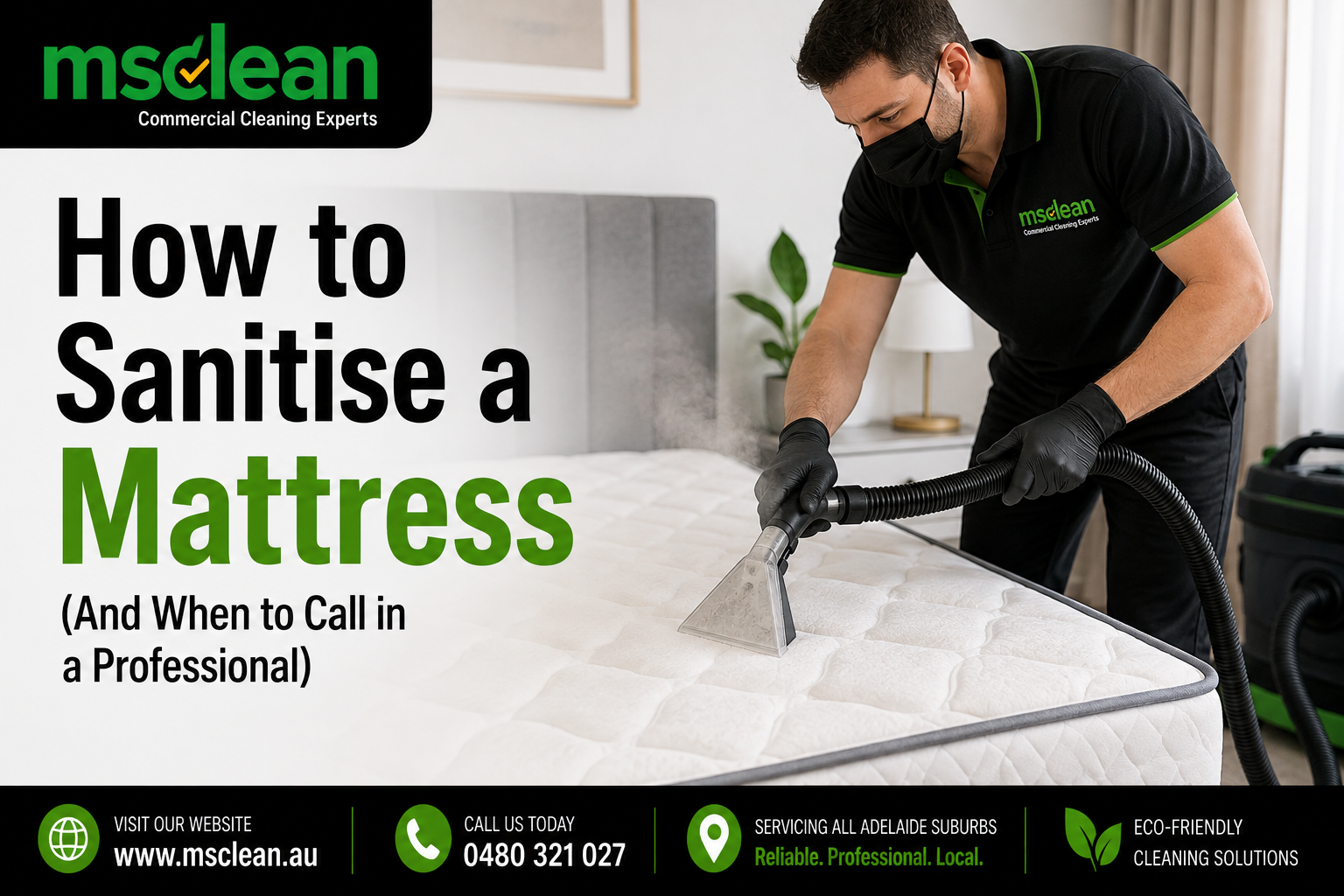
Sanitising a mattress means removing dust mites, bacteria, and trapped moisture, not just the smell. Strip and wash bedding on a hot cycle, vacuum the whole mattress with an upholstery attachment, treat stains with a targeted solution, then use steam or an enzyme spray on anything vacuuming can’t reach. Let it dry fully before remaking the bed. For deep-set stains, mould, or allergy issues, Ms Clean offers professional mattress sanitising across Adelaide.
You spend around a third of your life on your mattress, and most people never clean it properly. Sheets get washed weekly. The mattress underneath collects sweat, dead skin, dust mites and the odd spill for years without a real clean. An average mattress can hold millions of dust mites, feeding on the skin cells you shed every night. That’s not a sign of a messy household; it’s just what happens to fabric nobody thinks to wash.
Sanitising is a different cleaning job. Cleaning gets the surface looking tidy. Sanitising deals with what’s actually living in the mattress: mites, bacteria, and, in Adelaide’s warmer months, mould that can grow in anything left slightly damp. Here’s how to do it properly, and where DIY stops being enough.
Why Sheets Alone Don’t Cut It
A fitted sheet stops direct contact, but moisture, oils and skin cells still work their way through the fabric over months of sleep. Dust mites live off shed skin and thrive in warm, slightly humid conditions, which describe the inside of a mattress every night of the year. They don’t bite, but their waste is one of the most common indoor allergy triggers. People with unexplained morning congestion or itchy eyes sometimes improve once the mattress gets properly sanitised, not just the bedroom dusted.
Add a spill, a sick night, or years of Adelaide summer heat and sweat, and a mattress that looks fine on the surface can be holding a lot more than dust.
What You’ll Need
- A vacuum with an upholstery attachment
- Baking soda
- A spray bottle
- White vinegar or an enzyme-based cleaner
- Hydrogen peroxide (3%) and dish soap for stains
- A handheld garment steamer, if you have one (check your mattress warranty first — some brands exclude steam damage from coverage)
- Fans or a well-ventilated, sunny room for drying
The Full Sanitising Process
1. Strip everything off: sheets, mattress protector, pillowcases. Wash on the hottest cycle the fabric allows; heat above roughly 55°C is what kills dust mites in bedding, not the detergent itself.
2. Vacuum the entire mattress. Work in overlapping strips with the upholstery attachment. Don’t skip the seams and piping; that’s where dust and mites concentrate, since it’s the area least disturbed by normal use. Flip and vacuum the underside if your mattress allows it.
3. Treat any visible stains before you go further. Deodorising or steaming over a stain sets it rather than removing it. See the stain guide below.
4. Sprinkle the whole surface with baking soda. Leave it for at least an hour; overnight is better on a mattress that’s had years of use. Baking soda pulls moisture and odour out of the fibres rather than just masking the smell.
5. Vacuum the baking soda off. This also lifts a second round of debris the first pass missed.
6. Steam the surface, if you have a steamer and a foam-free mattress. Hold it a couple of centimetres above the fabric and keep it moving. Steam at the right temperature kills mites and bacteria on contact, but standing in one spot soaks the mattress instead of sanitising it. Skip this step on memory foam. Foam absorbs moisture and dries far more slowly than coil mattresses, and trapped damp inside the foam can lead to mould you often can’t see.
7. Let it dry completely before remaking the bed. Open windows, run a fan, or put it in direct sun outdoors if you can. A mattress that goes back under sheets while still slightly damp ends up worse off because damp fabric can grow mould and mildew inside, where you can’t reach it.
Stain-by-Stain: What Actually Works
| Stain | Treatment |
| Sweat (yellow marks) | Hydrogen peroxide and baking soda paste, left 15–20 minutes, blotted with a damp cloth |
| Urine | Blot up excess first, then hydrogen peroxide, baking soda and a drop of dish soap; leave to sit before blotting dry |
| Blood | Cold water only, blotted immediately; hot water sets blood stains permanently |
| Vomit | Scrape off solids, blot the area, then treat with an enzyme cleaner that breaks down the biological residue |
Blot, don’t scrub, and always work from the outside of the stain inward so it doesn’t spread further.
Memory Foam Needs a Different Approach
Foam holds moisture the way a sponge does, so steam-and-soak methods that work fine on a coil mattress can leave foam damp for days and encourage mould inside layers you can’t see. Stick to spot treatment with a barely damp cloth and diluted dish soap, plus baking soda for odour. Skip steam altogether, and never fully wet a foam mattress trying to sanitise it in one pass.
How Often Should You Do This?
A full sanitising session every six months keeps most mattresses in reasonable shape, with a lighter vacuum-and-baking-soda pass between monthly. Allergy sufferers, households with pets, and anyone getting through Adelaide’s hotter, more humid stretches benefit from doing it more often, since moisture and allergens build up faster than most people expect. A mattress protector cuts down how often deep sanitising is needed by catching sweat and spills before they reach the mattress itself.
When DIY Isn’t Enough
A few situations are worth calling in a professional rather than working through it yourself:
- A large urine or biological stain soaked deep into an older mattress
- Visible mould, especially on the underside or inside seams
- A musty smell that persists after a full sanitising cycle
- Bed bugs — sprays rarely solve an infestation; a professional heat treatment or replacement is usually the real fix
- Ongoing allergy symptoms that don’t improve after a home clean
Professional mattress cleaning uses hot-water extraction or UV sanitising equipment that reaches deeper into the mattress layers than a household steamer does. It dries the mattress properly afterwards so moisture doesn’t get trapped where you can’t see it.
Professional Mattress Sanitising in Adelaide
Ms Clean provides professional mattress sanitising for Adelaide homes, including deep stain treatment, dust-mite and allergen reduction, and full drying to prevent mould from taking hold afterwards. It’s worth booking if home treatment hasn’t shifted a stain or smell after two attempts, or if anyone in the household deals with allergies or asthma that a dusty, mite-heavy mattress can make worse.
Call Now for commercial carpet cleaning in Adelaide and get a free quote, or Book a Mattress Sanitising Service.
FAQs
How do you sanitise a mattress without a steamer?
Vacuum thoroughly, treat stains with hydrogen peroxide or an enzyme cleaner, then cover the surface in baking soda for several hours before vacuuming it off again.
Can I use bleach on a mattress?
No. Bleach breaks down mattress fibres and foam over time and can damage the fire-retardant layer built into most mattresses.
How long does a mattress take to dry after cleaning?
Usually 4 to 8 hours with good airflow, fans, or direct sun. Foam mattresses can take considerably longer and should never be fully soaked.
Does baking soda actually sanitise a mattress?
Baking soda absorbs moisture and neutralises odour but doesn’t kill bacteria or dust mites on its own; pair it with vacuuming and, where safe, steam or an enzyme cleaner.
How do I get urine smell out of an old mattress?
Blot the area first, apply a hydrogen peroxide and baking soda mix, let it sit before blotting dry, and repeat if the odour lingers after the first treatment.
Is it safe to sanitise a memory foam mattress with steam?
No. Steam and heavy moisture can become trapped in foam layers, leading to mould growth that’s difficult to detect or remove afterwards.
How often should a mattress be sanitised?
Roughly every six months for most households, more often for allergy sufferers, pet owners, or humid periods.
Do you offer professional mattress cleaning in Adelaide?
Yes, Ms Clean provides mattress sanitising across Adelaide for stains, odour and allergen reduction that home treatment hasn’t fully resolved.
Key Takeaways
- Sanitising deals with dust mites and bacteria, not just visible dirt — vacuuming alone doesn’t finish the job.
- Treat stains first, always with cold water and blotting, never hot water or scrubbing.
- Baking soda absorbs moisture and odour but isn’t a substitute for steam or an enzyme cleaner where bacteria are the real problem.
- Memory foam needs a drier approach — skip steam, avoid soaking, and give it longer to dry.
- Let the mattress dry completely before remaking the bed, since trapped damp causes more problems than the original mess.
- Large stains, mould, or ongoing allergy symptoms are the point where a professional Adelaide mattress clean is worth booking.


