
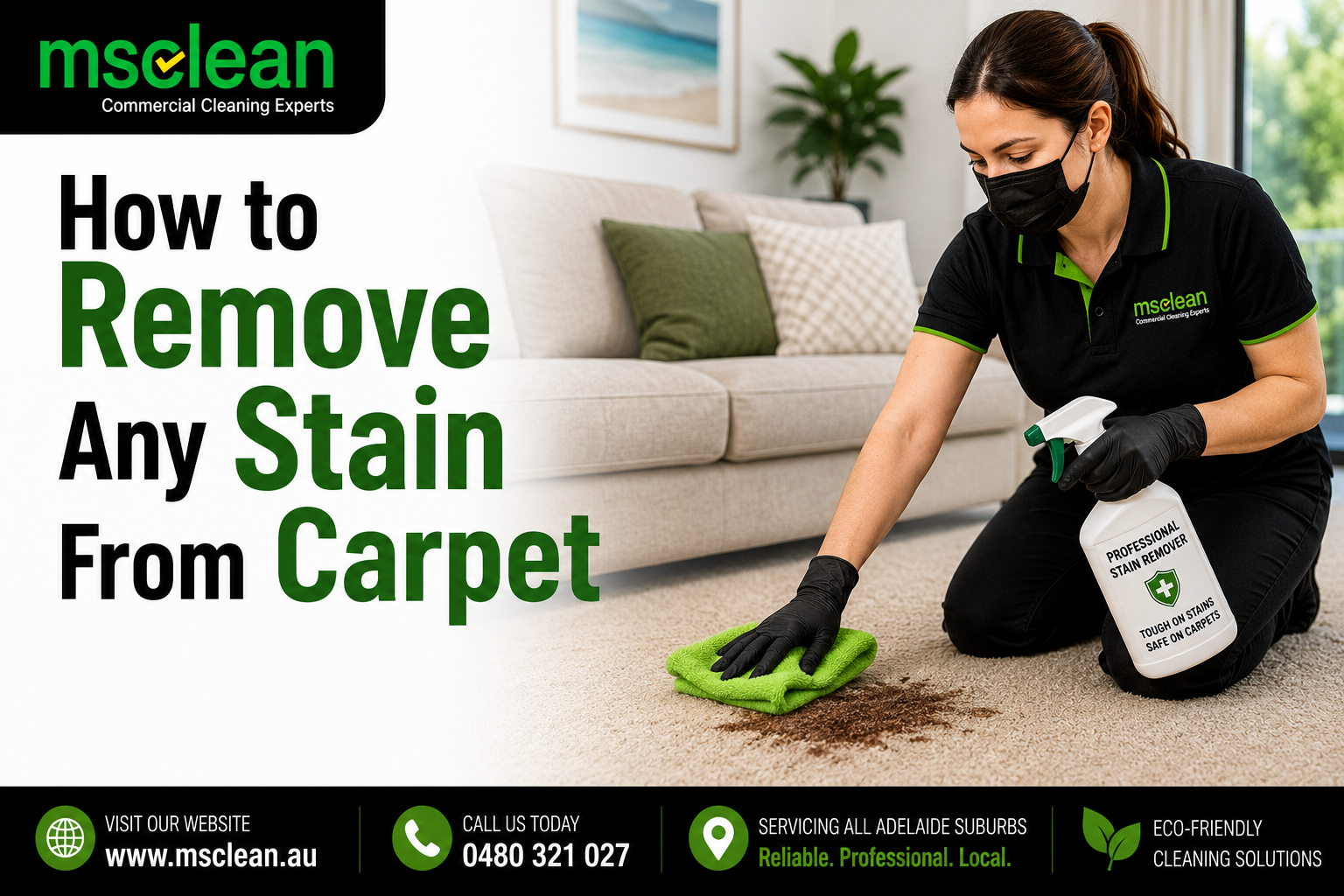
A stain on the carpet always seems to happen at the worst time: five minutes before guests arrive, or the morning after a dinner party. The good news is that most stains, even ones that look permanent, respond to the right method. The bad news is that the wrong method sets a stain for good, and there’s no undoing that.
This guide covers the method that works for almost every stain type, a stain-by-stain breakdown for those that need special handling, and the point at which DIY stops being worth the risk.
The Three Rules That Actually Matter
Every carpet cleaner, every product label, and every professional technician will tell you the same three things. Ignore the rest of the advice online if you have to, but not these.
Blot, never rub. Rubbing pushes the stain deeper into the carpet backing and frays the fibers, which makes the spot look worse even after the stain itself is gone. Press a clean cloth straight down onto the mark and lift it away. Repeat with a fresh section of cloth each time.
Work from the outside in. Starting at the edge of the stain and moving inward stops it from spreading to clean carpet. Starting in the middle pushes liquid outward in a ring.
Speed beats strength. A stain treated in the first five minutes usually comes out with plain water. The same stain left overnight might need three or four rounds of a stronger solution and some, like red wine or turmeric, never fully release once they’ve dried and oxidized.
What You Need Before You Start
Keep these on hand, so you’re not searching for a rag while a spill spreads:
- Plain white cloths or paper towels (color can transfer onto damp carpet)
- A spray bottle for diluted solutions
- Dish soap (a clear, dye-free one)
- White vinegar and bicarb soda
- Hydrogen peroxide (3%) for light-coloured carpet only
- A soft-bristled brush or old toothbrush
- A wet/dry vacuum, if you have one
Test any solution on a hidden patch of carpet first — inside a wardrobe or under a rug — and wait ten minutes to check for color change before treating a visible area.
The Basic Method (Works for Most Fresh Stains)
- Scrape or blot up whatever’s sitting on top. For liquids, blot with a dry cloth. For solids like food or mud, scrape gently with a spoon before it grinds in.
- Mix one teaspoon of dish soap with two cups of cold water. Hot water can set protein-based stains and food dyes.
- Apply the solution to a cloth, not directly to the carpet, and blot the stain from the outside in.
- Rinse by blotting with a cloth dampened in plain cold water to lift the leftover soap residue. Soap residue attracts dirt and leaves the spot looking dull for weeks.
- Press dry towels over the area and weigh them down with something heavy, or use a wet/dry vacuum, to pull moisture out of the pad underneath. A carpet that stays damp for too long grows mould.
For most everyday spills juice, tea, dirt, food this is the entire job. The stains below need a different approach.
Stain-By-Stain Guide
| Stain | Best First Move | Follow-Up If It Doesn’t Lift |
| Red wine | Blot immediately, then flood with soda water | Cover with salt, leave to dry, vacuum off; or dab with a little white wine to lift the pigment |
| Coffee or tea | Blot, then apply dish soap and cold water | One tablespoon white vinegar in two cups water, blotted in |
| Pet urine (fresh) | Blot dry, flush with cold water, and blot again | Equal parts white vinegar and water, left 10 minutes, then blotted |
| Pet urine (old/set) | Enzyme-based pet stain cleaner, left to sit per label | Repeat treatment — enzymes need time to break down the crystal; one pass rarely finishes the job |
| Blood | Cold water only, blotted immediately | Hydrogen peroxide dabbed on (light carpet only), rinsed after it stops fizzing |
| Ink | Isopropyl alcohol on a cloth, dabbed, not poured | Repeat in small sections; several rounds are normal |
| Grease or oil | Sprinkle bicarb soda or cornflour, leave 15 minutes to absorb, vacuum | Dish soap and warm water, blotted, then rinsed |
| Vomit | Scrape solids, blot liquid, treat with dish soap solution | Baking soda left overnight to pull out remaining odor |
| Candle wax | Freeze with an ice pack until brittle, then scrape off | Place brown paper over the spot and run a warm iron over the paper to draw out residue |
| Chewing gum | Freeze with ice until hard, then break off in pieces | Dab remaining residue with a small amount of rubbing alcohol |
Old and Set-In Stains: What Actually Works
A stain that’s been sitting for weeks behaves differently to a fresh one because the liquid has already dried into the fibers and, in some cases, oxidized and changed color. Rubbing harder doesn’t help here the stain needs to be softened before it can be lifted.
Mist the area lightly with warm water and let it sit for 5 to 10 minutes to loosen the dried residue. Then work in a mix of dish soap and water, or an oxygen-based cleaner for darker stains on light carpet, using the same blot-and-lift motion. Old stains are usually layered, meaning the first pass lifts the top layer and a second treatment is needed to get what’s left. Don’t expect one round to finish the job that expectation is where most DIY attempts get declared a failure too early.
If a stain has changed the color of the carpet fiber itself rather than sitting on top of it, no amount of cleaning brings it back. That’s fiber damage, not a stain, and it usually means a patch repair or a professional assessment.
Carpet Fiber Matters More Than the Product You Choose
The same stain remover can work perfectly on one carpet and ruin another, because different fibers react differently to heat, acid, and moisture.
- Nylon is the most forgiving and tolerates most household cleaners well.
- Polypropylene (olefin) resists staining from water-based spills but holds onto oil and grease, so it needs a degreasing approach rather than soap and water.
- Wool is sensitive to alkaline cleaners and high heat stick to pH-neutral solutions and cold water, and avoid steam cleaning without checking manufacturer guidance first.
- Loop-pile and Berber carpets can snag if you scrub with a brush, so blotting matters even more here than on cut-pile carpet.
If you don’t know what your carpet is made of, check the manufacturer’s care label or the installation receipt before using anything stronger than dish soap and water.
Common Mistakes That Make a Stain Worse
Scrubbing hard, using hot water on protein- or dye-based stains, mixing bleach with ammonia-based products, and applying too much liquid so it soaks into the underlay are the most common ways a manageable stain becomes permanent. Over-wetting is especially easy to miss: if the pad underneath stays damp, it can develop mould within 24 to 48 hours, which then needs a much bigger repair than the original stain.
When to Call a Professional Instead of DIY
DIY handles the majority of household stains, but a few situations are worth handing over:
- The stain has been treated at home already and hasn’t shifted after two attempts
- It covers a large area, rather than a single spill point
- It involves bodily fluids, sewage, or anything with a biohazard risk
- The carpet is wool, antique, or otherwise high-value
- The color has changed rather than just marked (fiber damage, not surface staining)
Professional carpet cleaning uses hot water extraction and stronger, carpet-safe solvents that aren’t sold for home use, along with equipment that pulls moisture out properly so the pad doesn’t stay wet. For businesses and strata buildings, this also comes with documentation — before-and-after photos, chemical safety data sheets, and sign-off records — that a landlord, tenant, or insurer might ask for.
Madani Commercial Cleaning handles both routine carpet maintenance and one-off stain and spill call-outs for offices, strata buildings, and commercial tenancies. [Business-specific details — years trading, certifications with dates, service area, and pricing — should be confirmed and inserted here before publishing, so every claim on the page is accurate and verifiable.]
What Professional Carpet Stain Removal Typically Costs
Pricing varies by provider and region, but most Australian carpet cleaners quote based on a few consistent factors:
| Cost Driver | What It Covers |
| Room size / square meters | Base rate for standard hot water extraction |
| Stain severity | Extra treatment time for set-in or biological stains |
| Carpet type | Wool and delicate fibers often carry a premium for safer, slower methods |
| Furniture moving | Some quotes include it, others charge separately |
| Call-out timing | After-hours or same-day service usually costs more |
Call Now for commercial carpet cleaning in Adelaide and get a free quote, or Book a Mattress Sanitising Service.
Frequently Asked Questions
How do I remove a stain from carpet that’s already dried?
Mist it with warm water first to loosen any residue, then treat it with dish soap and water or an oxygen cleaner, and repeat once if needed.
What is the best homemade carpet stain remover?
A teaspoon of dish soap in two cups of cold water handles most stains safely, without bleaching or discoloring carpet fibers.
Why does rubbing a stain make it worse?
Rubbing pushes the stain deeper into the carpet backing and frays fibers, spreading the mark instead of lifting it out.
Can vinegar damage carpet?
Diluted white vinegar is safe for most synthetic carpets, but it should be tested first on wool, since wool is more sensitive to acidic solutions.
Do you offer emergency stain or spill clean-up for offices?
Yes commercial call-outs for spills, pet accidents, and biohazard situations are available on short notice for business premises.
How long should I wait before walking on a treated carpet?
Let the area dry fully, usually two to four hours with fans or airflow, before walking on it in socks or shoes.
Will hydrogen peroxide bleach my carpet?
It can lighten dark or dyed carpet, so test it on a hidden patch first and use it only on light-coloured carpet.
When should I stop DIY and call a professional?
If two treatment attempts haven’t shifted the stain, or the carpet has changed color rather than just marked, it’s time to call in a professional.
Key Takeaways
- Blot, don’t rub — rubbing spreads a stain and damages fibers.
- Work outside in, and treat spills within the first few minutes for the best result.
- Match the method to the stain type — wine, protein, ink, and grease all need different approaches.
- Old stains usually need two treatment rounds, not one.
- Know your carpet fiber before reaching for anything stronger than dish soap and water.
- If DIY hasn’t worked after two attempts, or the carpet has changed color, a professional assessment is the next step .


